
Reviewed · VITI LEVU TOURS
Vavavi – Fijian Cooking & Cultural Experience
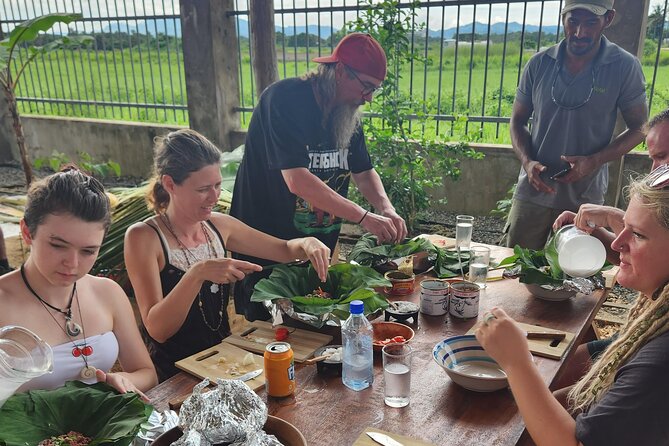
The best part of this experience is that lunch begins long before you sit down. You help prepare Fijian dishes, watch a lovo earth oven take shape, visit the market where locals buy fresh produce, and then eat what you helped make. It is a practical way to understand Fiji through food rather than a quick cultural show.
I like two things especially. First, the small maximum of 12 people should give the day a personal, family-style feel. Second, the mix of cooking, coconut scraping, weaving, kava tasting, and market shopping gives you more than a single kitchen lesson. The main consideration is the six-hour length and fixed 9 a.m. start, which may not suit every holiday schedule.
Key points at a glance
- A real lovo lunch: Help prepare food for Fiji’s traditional earth oven, including dishes such as palusami.
- A local market visit: See where fresh produce is bought for everyday cooking, not just ingredients arranged for tourists.
- At least four Fijian foods: Take part in preparing traditional dishes such as eggplant tavu.
- Several hands-on activities: Try coconut scraping, weaving, and kava tasting alongside the cooking.
- Small-group setting: The experience is limited to 12 people, useful for families and anyone who prefers a quieter class.
- Dietary needs can be handled: Vegetarian, vegan, halal, and gluten-free requirements can be catered for when arranged.
Why the lovo is the heart of the day
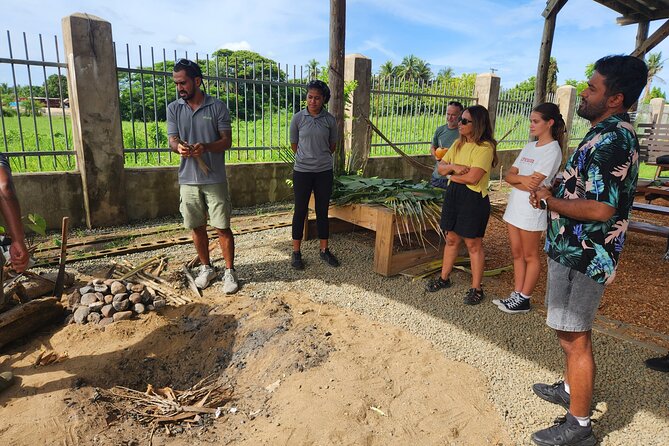
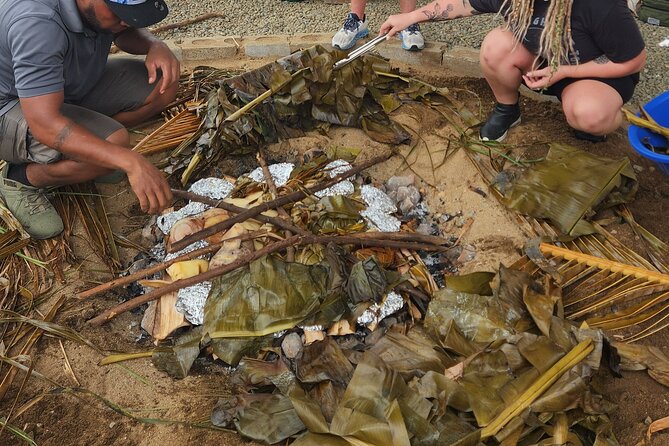
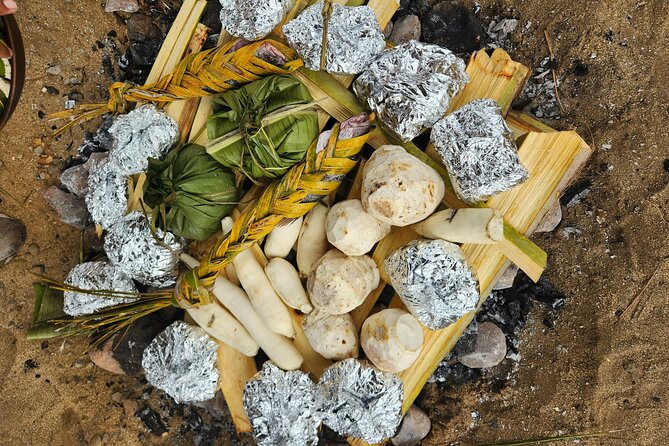
A lovo is an earth oven used to cook food slowly with heated stones. Here, you do not simply see the finished meal arrive at the table. You watch a lovo being set up and help prepare the food that will cook inside it.
That makes the meal more meaningful. You can connect the cooking method with the food on your plate, rather than treating the earth oven as a photo stop. The process also gives the day a clear rhythm: prepare, wait, learn, and eat.
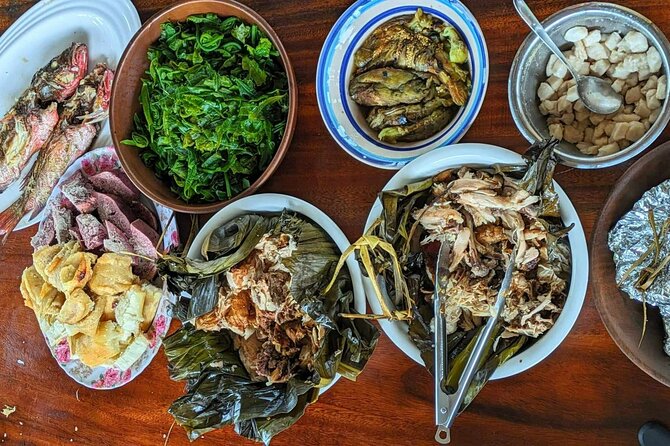
Palusami is one of the foods named for the lovo preparation. This is a traditional dish associated with taro leaves and a rich filling, though the exact recipe and tasks may depend on the day’s menu. You also prepare other Fijian foods using fresh local ingredients, including eggplant tavu.
I like this format because it gives you something to do with your hands. If you only want to sit and watch, this may feel more active than expected. If you enjoy learning by doing, the lovo is likely to be the most memorable part of the experience.
More Cultural Village Tours in Fiji
- Jewel Of Fiji incl Fijian Village, waterfall & Lunch(Nadi Hotels)
★ 5.0 · 570 reviews - ATV Quad Bike Adventure Tour to Remote Village and School (Departs Nadi)
★ 5.0 · 98 reviews - Vuda Lookout, Vesisei Village, Market, Temple & Garden of Sleeping Giant Tour
★ 4.5 · 97 reviews
Starting at 9 a.m. near Nadi
The day begins at 9 a.m. at Vavavi Cooking and Cultural Experience on Enamanu Road in Nadi. Pickup is offered, but transfers from outside the Nadi and Denarau area are not included. Check your hotel location before booking, since transport arrangements may affect the price and convenience.
An air-conditioned vehicle is included where transport is provided. That matters in Fiji’s warm climate, particularly when you are moving between the market and the cooking location. The activity ends back at the meeting point, so you do not need to arrange a separate return from another part of Viti Levu.
The total duration is about six hours. This is not a short demonstration squeezed between beach time and dinner. Plan for most of the morning and part of the afternoon, with time for food preparation, cultural activities, lunch, and the market visit.
The small group limit of 12 people is another practical advantage. A cooking activity can become awkward when everyone is trying to reach the same bowl or work surface. A group this size should make it easier to ask questions and take part, although the exact pace will depend on the group.
A welcome drink and a gentle introduction
You are greeted with a welcome drink before the main activities begin. This gives the day an easy start and sets a friendly tone without rushing straight into instructions.
The hosts named for this experience include Sam, Rocky, Joy, and John. Their roles may vary during the day, but you can expect the experience to be led by a small local team rather than a large commercial operation. The family-run setting is important here. The appeal is not only the recipes, but also the chance to spend time with people who present the food as part of everyday Fijian life.
Morning tea is included as well. Since lunch comes later, this is useful rather than decorative. Cooking and market visits take time, and a light break helps keep the morning comfortable.
The tone appears suited to a wide range of ages. A family with three generations can take part, and the mix of cooking and craft activities gives children something more engaging than a talk. Still, young children may need supervision around cooking equipment and the lovo area.
The local market puts the food in context
The market visit is one of the most useful parts of the schedule. You see where fresh produce is purchased locally and gain a better sense of the ingredients used in Fijian kitchens.
This stop gives the cooking class a wider context. Instead of treating coconut, eggplant, leafy vegetables, and other produce as isolated items on a recipe sheet, you see them as part of the regular food supply. The market also helps explain why fresh ingredients matter so much to the dishes you prepare later.
The visit is not described as a long shopping expedition, so keep your expectations in check. You should book it as a guided look at local produce and buying habits, not as a dedicated market tour with extensive free time.
I would pay attention to what is seasonal and ask how the ingredients are normally cooked at home. The value here comes from connecting the market to the meal, not from collecting a list of sights.
More Cultural Village Tours in Viti Levu
- Half Day Sigatoka River Jetboat & Village Tour with Lunch & Transfers
★ 5.0 · 35 reviews - ATV Quad Bike and Helicopter Adventure Tour to Remote Village (Departs Nadi)
★ 5.0 · 23 reviews - Fiji Local Village, Market, Temple & Garden of Sleeping Giant with Mud Pool Tour
★ 5.0 · 19 reviews - Private Lautoka Shore Excursion including Viseisei Village
★ 4.5 · 11 reviews
Preparing at least four traditional foods
The cooking portion is hands-on. You help prepare at least four traditional Fijian dishes or foods, with examples including palusami and eggplant tavu.
That number gives the class some range. You are not spending the whole day learning one recipe, then waiting for it to cook. You get a broader introduction to flavors, ingredients, and methods, with the lovo food forming part of the larger meal.
The exact division of tasks is not specified, so some jobs may be simple preparation while others involve more direct cooking. That is normal in a group class. If you want a particular role, ask the hosts early in the day.
The cooking is also where dietary needs should be raised clearly. Vegetarian, vegan, halal, and gluten-free requirements can be accommodated. Contacting the provider before the experience is still the sensible move, since the menu and preparation plan need to be adjusted in advance.
Lunch includes drinks, with coffee or tea and bottled water listed among the inclusions. This helps make the $117.12 price easier to assess. You are paying for a half-day activity, instruction, multiple food preparations, market access, cultural activities, transport in the service area, and a meal rather than a single restaurant sitting.
Coconut scraping and weaving add local skills
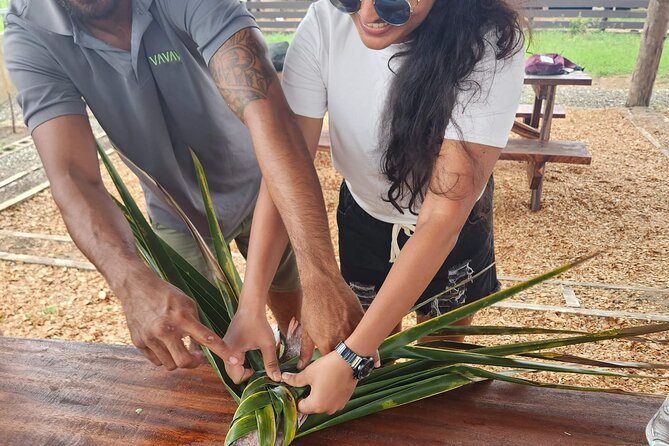
The traditional activities broaden the experience beyond food. Coconut scraping and weaving show skills that are easy to miss when a cultural visit is limited to performances or storytelling.
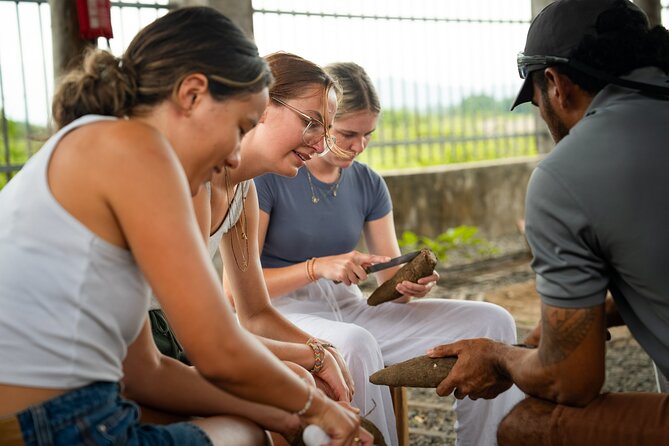
Coconut scraping is especially relevant to cooking because coconut appears in many Pacific dishes. You get a physical sense of the work involved in preparing an ingredient that may arrive in a modern kitchen already processed. It is a small task, but it connects the finished food with the labor behind it.
Weaving offers a different kind of lesson. It slows the pace and lets you see a practical craft rather than another recipe. The details of what you make are not specified, so I would treat this as an introduction rather than a formal craft workshop.
These activities may be a welcome change for anyone who does not cook often. They also give families a chance to split up and try different tasks, though the experience remains centered on group participation.
Kava tasting with useful cultural context
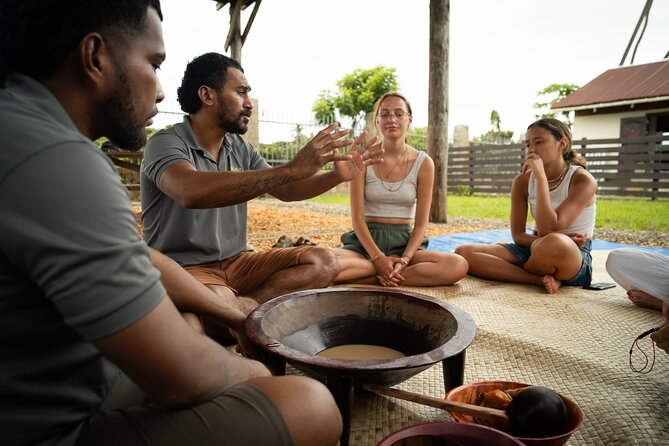
Kava tasting is included. Kava is an important drink in Fijian social and cultural life, so this is more than another beverage sample.
The tasting gives you a chance to learn how the drink fits into local customs. The information provided does not specify the ceremony, quantity, or serving format, so do not assume this is a full formal kava ceremony. It is best understood as a guided introduction.
If you have never tasted kava, expect a flavor and texture that may be unfamiliar. Approach it with curiosity, and listen to the hosts’ instructions about how it is served. This is one of those moments when respectful participation matters more than trying to turn the experience into a novelty.
The same advice applies to the other activities. Ask questions, join in where you can, and remember that the hosts are sharing parts of their culture rather than staging a performance for quick photographs.
Is $117.12 a fair price?
At $117.12 per person, this costs more than a simple lunch or short cooking demonstration. The comparison is not quite fair, though, because the price covers about six hours and several different parts of the day.
You receive:
- A welcome drink and morning tea
- Preparation of at least four traditional foods
- A lovo demonstration and meal preparation
- Lunch with drinks
- Coffee or tea and bottled water
- A local market visit
- Coconut scraping, weaving, and kava tasting
- An air-conditioned vehicle where included
- A small-group setting capped at 12 people
I consider that reasonable value if you want a full cultural activity near Nadi and would otherwise pay separately for food, transport, and a market visit. The value is weaker if you mainly want a quick meal or a polished chef-led class focused on advanced cooking technique.
The food is the center of the day, but you are also paying for access to a family setting and for explanations that are difficult to get from a standard restaurant. That is the real reason to choose it.
Who will enjoy this most?
I would recommend Vavavi to families, couples, small groups, and solo visitors who like participation more than passive sightseeing. The three-generation family format makes sense here because the activities vary in pace and type.
It should also suit anyone who wants a first introduction to Fijian food. You do not need to arrive with specialist cooking skills. The experience is designed around preparation, demonstration, tasting, and conversation.
It may be less suitable if you have a tight itinerary, dislike group cooking, or want a highly structured professional culinary course. The family-run atmosphere is part of the appeal, but it may also mean the day feels relaxed and informal rather than tightly timed.
The six-hour duration is worth taking seriously. With a 9 a.m. start and a return to the meeting point, this will occupy much of your day. Build your schedule around it rather than trying to fit it between other fixed activities.
Practical details before you book
The activity begins and ends at the Vavavi location on Enamanu Road in Nadi. Pickup is offered, but service outside Nadi and Denarau is not included. Confirm the pickup point and any added transport cost before you commit.
A mobile ticket is available, and booking confirmation is normally received at once. If you book within one day of travel, confirmation may take longer and depends on availability.
Service animals are allowed. Dietary requirements can be handled, including vegetarian, vegan, halal, and gluten-free diets. Give the provider the details before the day so the food preparation can be planned properly.
Free cancellation is available up to 24 hours before the 9 a.m. start time for a full refund. Changes or cancellations inside that window are not accepted and are not refunded. The experience also requires a minimum number of participants, so if the provider cancels because that number is not met, you will be offered another date or experience, or a full refund.
The activity has a 5.0 rating from 54 reviews, with 100 percent recommending it. Those numbers suggest a very consistent experience, but they should not replace checking the practical fit: location, start time, food needs, and willingness to spend six hours in a social setting.
Should you book the Vavavi experience?
Book it if you want to meet a local family, prepare Fijian food, see a lovo being built, and connect a market visit with the meal on your plate. The combination of cooking, crafts, kava, and lunch gives you a fuller picture of daily food culture than a restaurant meal can provide.
I would be especially keen to book this for a family or anyone staying in Nadi or Denarau who wants one substantial cultural day without a long trip across Viti Levu. The small group and dietary flexibility add practical value.
Skip it if your holiday schedule cannot spare six hours, or if you want a formal culinary course with exact recipes and advanced technique. For everyone else, the mix of food, family warmth, and hands-on work makes this a strong choice at a fair price.
FAQ
Where does the Vavavi cooking experience start?
It starts at Vavavi Cooking and Cultural Experience on Enamanu Road in Nadi, Fiji. The activity ends back at the meeting point.
What time does the experience begin?
The start time is 9 a.m. The total duration is approximately six hours.
Is pickup available?
Pickup is offered. Transfers from outside the Nadi and Denarau area are not included.
How many people can join the experience?
The activity has a maximum of 12 travelers.
What food and drinks are included?
Lunch, drinks, bottled water, coffee or tea, and morning tea are included. You also prepare at least four traditional Fijian dishes or foods.
Can dietary requirements be accommodated?
Yes. Vegetarian, vegan, halal, and gluten-free requirements can be catered for.
What is the cancellation policy?
You can cancel at least 24 hours before the start time for a full refund. Cancellations or changes made less than 24 hours before the experience are not accepted or refunded.
Just added around Viti Levu
- iconic waterfall tour★ 4.5 · 12 reviews
- Yasawa Islands Explorer Cruise with Lunch★ 3.5 · 26 reviews
- Round The Island Day Trip Fiji- Viti Levu★ 5.0 · 17 reviews
- Ultimate Shark Encounter Two Tank Dive at The World Famous Beqa Lagoon★ 5.0 · 18 reviews
- Waterfalls and Nature Tour★ 4.5 · 9 reviews
- Discover Fiji Best Sights Tour from Lautoka wharf Cruise Ships★ 4.0 · 5 reviews
- Discover Coral Coast Combo Tour★ 3.5 · 3 reviews
- Skydive Fiji Radical 10000ft Tandem Jump (30 seconds free fall)★ 5.0 · 12 reviews
Viti Levu Tours, compared.

Cruisin Fiji: Authentic Fijian Day Cruise – Best Day in Fiji
Read the full review →

Captain Cook Cruises Fiji – Island and Reef Day Cruise
Read the full review →

South Sea Sailing Full Day Trip (5 years and above only)
Read the full review →
Jewel Of Fiji incl Fijian Village, waterfall & Lunch(Nadi Hotels)
Read the full review →
Full Day South Sea Island with Lunch & Drinks
Read the full review →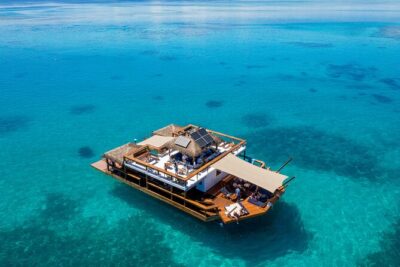
Day Trip to Cloud 9 Floating Platform Including Food and Beverages
Read the full review →Browse the lists this tour appears in