
Reviewed · DENARAU ISLAND TOURS
Private Experience of the Authentic Lifestyle of People In Fiji
The best part of this tour is the range of everyday encounters packed into five hours. You move from a produce market to a rural farming school, an Indian family home, and Yavuna Village, seeing how Fijian and Indo-Fijian life fits together beyond the resort area.
I like the personal scale of the private 4WD or minibus, and I like the chance to eat food prepared in local homes rather than only at a hotel. The visit to the school and the chance to see sugarcane farming add useful context, too. One consideration: this is a social, flexible cultural outing, not a polished sightseeing loop, so timings and the exact guide may vary.
Key points to know before booking
- Four distinct parts of Fiji in one morning: You visit a market, rural school and farms, an Indian household, and Yavuna Village.
- A real sevusevu welcome: The village visit includes a traditional kava ceremony, followed by a guided walk.
- Food is part of the learning: You taste seasonal fruit, sample Indian dishes, and share an authentic village lunch.
- Guides add a personal touch: Lina is praised for her storytelling, while Paulina is noted for her warm, professional approach.
- Private transport is included: Pickup is offered from Denarau-area hotels in a 4WD or minibus.
- Plan around the five-hour schedule: The experience starts at 9:00 a.m. and is designed as a half-day outing.
Why this tour gives you a fuller picture of Fiji
Denarau Island is built for easy holidays, with resorts, pools, restaurants, and organized activities close at hand. This tour takes you away from that resort setting and into ordinary places where people shop, farm, teach, cook, worship, and welcome visitors.
I like the way the day connects two major parts of Fijian society. You see Indigenous Fijian village customs in Yavuna, then learn about Indo-Fijian food and family life at an Indian host’s home. That combination matters because Fiji is not one single cultural experience.
The tour does not ask you to observe from a distance. You taste fruit at the market, meet students at the rural farming school, share food in a private home, take part in a kava welcome, and eat lunch prepared by the village. The result is less about checking off famous sights and more about listening, asking questions, and noticing how daily life works.
A few more days out around Denarau Island
- Cultural Night Tour
★ 4.5 · 470 reviews - Fiji: Malamala Beach Club Private Island Day Pass & Transfer
★ 4.7 · 413 reviews - Nadi: Garden Village Hot Spring & Temple Highlights Tour
★ 4.6 · 339 reviews
Starting at the market with seasonal fruit
The day begins with hotel pickup at about 9:00 a.m. You travel in a private 4WD or minibus, with transport arranged for your own group rather than a large shared coach.
The first stop is a fruit and vegetable market. Your guide shows you local produce and points out ingredients that will appear later in the day’s food. You may also taste fruit that is in season, which makes this more than a quick photo stop.
This is a useful beginning because food gives you an easy way into Fijian culture. You can ask what people cook at home, what grows locally, and how market produce connects with the meals served later. If you have food allergies or dietary restrictions, raise them with the operator before booking, since the experience includes several tastings and a village lunch.
The market is also a reminder that Fiji’s food culture is broader than resort menus. You may see produce that is unfamiliar to you, and the guide can explain how it is used. The exact fruit selection will depend on the season, so do not book this expecting one fixed tasting list.
Meeting students at a rural farming school
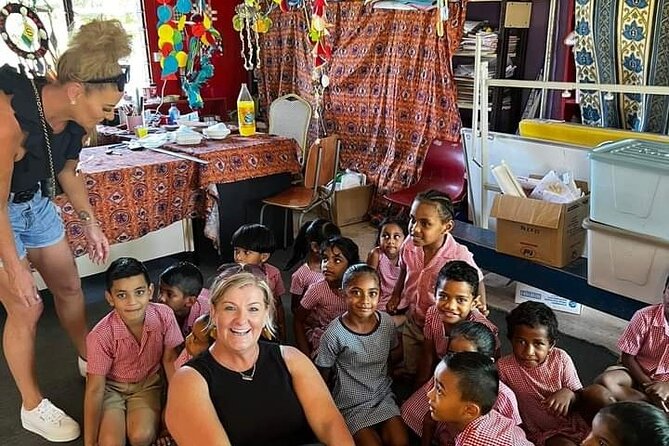
The next stop is a rural farming school, where you tour the grounds and meet students. This is one of the day’s most distinctive elements. Many cultural outings focus on ceremonies and performances, while this stop shows education and agriculture as part of everyday community life.
You then pass through sugarcane and vegetable fields. If conditions are right, you might see oxen ploughing in the same traditional way used for more than a century. That possibility is not guaranteed, but it gives you a useful sense of the farming methods still connected to rural Fiji.
I especially like this section for anyone with an interest in agriculture, rural education, or community life. One person with an agricultural engineering background received extra discussion about Fijian farming practices, so tell your guide what interests you. Guides such as Lina are praised for answering questions and adjusting the conversation to the people in the group.
There is also a practical point here. A school visit is not a staged attraction in the usual sense. You are entering a working educational setting, so a respectful attitude matters. Be ready to listen, follow the guide’s instructions, and accept that the stop may feel less tightly timed than a standard sightseeing visit.
Sharing Indian food in a family home

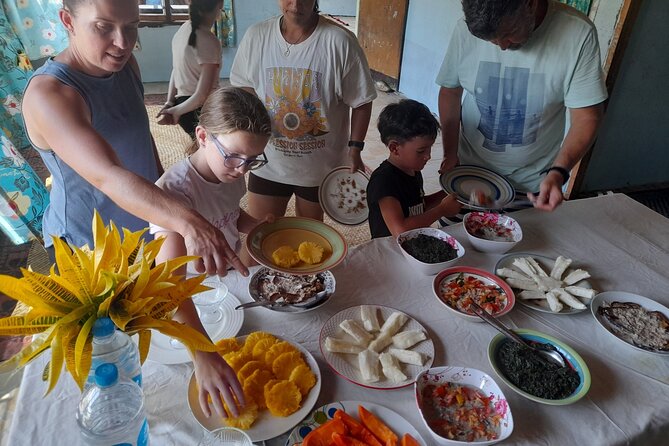
The route continues to an Indian friend’s house, where you sample Indian food and hear about the family’s culture and history in Fiji. This home visit is a strong part of the tour because it gives you a personal setting for understanding the country’s Indo-Fijian community.
The food is prepared and shared in a household rather than presented as a restaurant tasting. That changes the tone. You are not only trying dishes, but also hearing how food, family, and cultural identity connect.
The exact menu is not specified, so expect a selection rather than a fixed restaurant-style meal. The market stop helps set up this visit, since the guide may show you ingredients that appear in the day’s food. You can also compare the Indian dishes with the village lunch later in the morning.
Several guides have been praised for making this section feel friendly and informative. Lina is known for storytelling, and Paulina is described as a warm, professional cultural guide. The listing does not guarantee which guide you will have, so treat those names as examples of the guiding style available rather than a promise of a particular person.
Same island, a completely different day on the water:
- Discover Nadi Tour
★ 4.5 · 311 reviews - Robinson Crusoe Sunset Cruise Including Dinner, Cultural Show & Transfers
★ 4.5 · 171 reviews - Fiji: South Sea Sailing Experience with Lunch & Drinks
★ 4.9 · 155 reviews - Ultimate Encounter Snorkel with Sharks in Fiji
★ 4.5 · 151 reviews
Entering Yavuna Village through a sevusevu ceremony
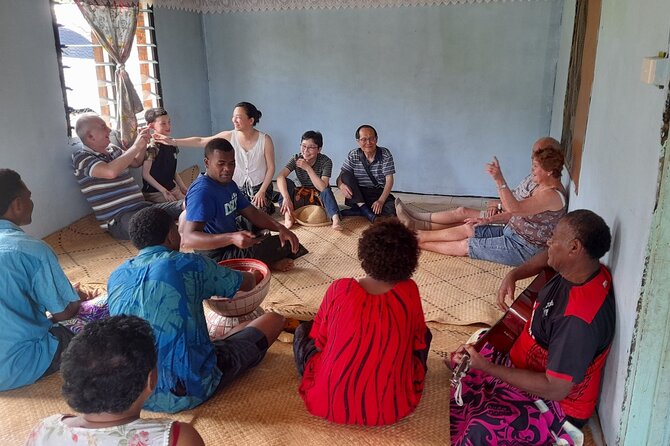
The final major stop is Yavuna Village, where a village guide welcomes you. In Fijian culture, a sevusevu ceremony is used to welcome visitors, and kava is part of this ceremony.
Kava is not simply a drink tasting. Here, it has a social and ceremonial role. Your guide can help explain what is happening and how to behave respectfully. Pay attention during the welcome, follow local instructions, and avoid treating the ceremony as a quick photo opportunity.
After the welcome, a village guide takes you on a walk around the community. This is your chance to see the village in context and ask about daily life. The experience is built around conversation and shared space, not a scripted performance.
A village visit requires a little flexibility. You should not expect every part of the walk to run to an exact minute, and you may find that the most interesting moments come through questions and informal exchanges. If you prefer a fast-moving tour with constant sightseeing, this may feel slow. If you enjoy meeting people and learning through conversation, it is likely to be the most rewarding part of the day.
Eating an authentic village lunch
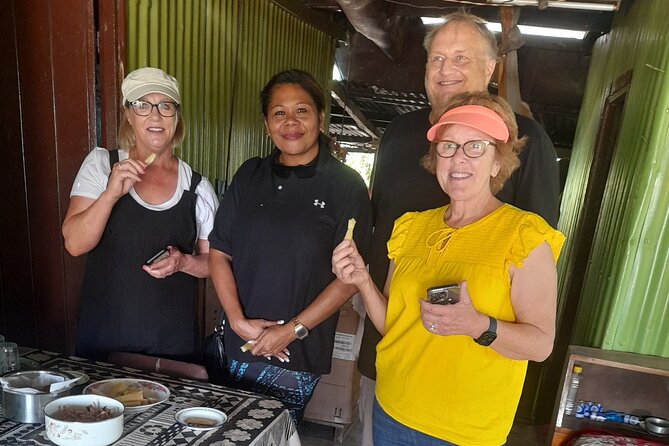
Before leaving Yavuna, you are invited to eat lunch prepared by the village. This meal brings the different parts of the morning together: the market ingredients, the farming discussion, the Fijian welcome, and the shared social setting.
Food is one of the clearest ways to understand a culture, and a village meal gives you a more direct experience than a standard hotel buffet. You can ask about the dishes, how they were prepared, and how they fit into local life.
The tour description does not provide a menu, so do not expect to choose from a list of dishes. The meal is part of the community visit and may reflect what is available locally. If you have dietary needs, contact Off The Grid Tours before the day begins rather than assuming alternatives will be available.
The lunch also affects the pace. You are not being rushed from one photo stop to the next. The meal is intended as part of the welcome, so allow yourself to be present and courteous.
What the private format changes
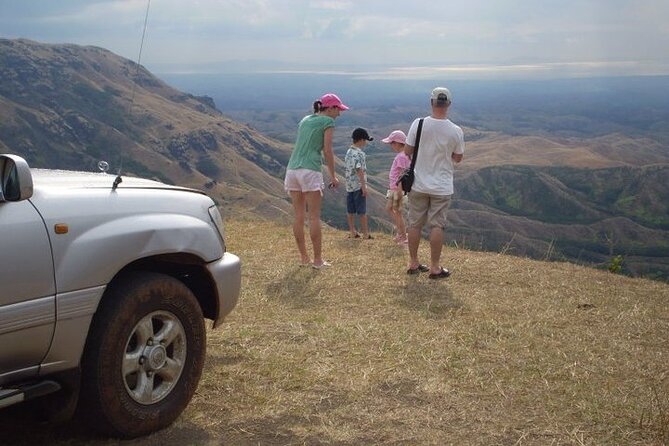
This is a private activity, meaning only your group participates. That is valuable on a cultural tour because you can ask more questions and spend more time on subjects that interest you.
A private group can also make home and village visits feel more personal than a large bus tour. You are not trying to hear a guide over a crowd, and the guide can tailor the conversation. One person may want to discuss farming, while another may be more interested in religion, food, or family life.
Pickup is offered, and the transport is a 4WD or minibus. The tour begins at 9:00 a.m. and lasts about five hours. The exact pickup arrangements should be confirmed when booking, since the supplied details identify Denarau Island as the location but do not list individual hotel times.
The private format does not mean the day is luxurious in the resort sense. Its value comes from access, conversation, and a locally focused route. You pay about $97.84 per person, which is fair if you want transport, guiding, several cultural stops, food sampling, a ceremony, and lunch in one half-day outing. It is less appealing if you only want a scenic drive or a quick village photo stop.
The guides and the human side of the day
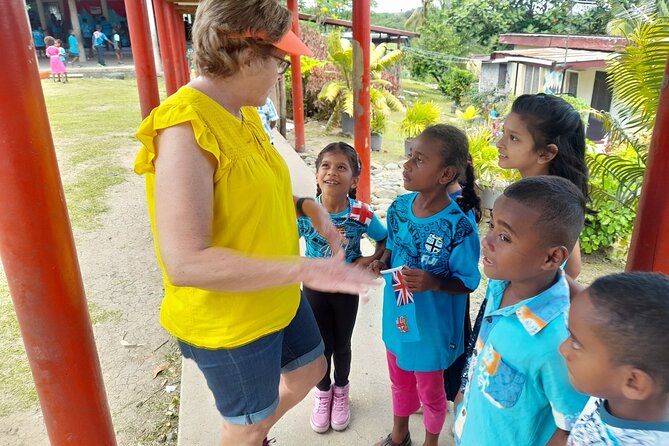
The guide matters greatly here because the tour depends on explanation and trust. Lina is praised for her storytelling and for answering questions, while Paulina is described as professional, friendly, and personal.
The guide may ask about your interests and use that information to shape the discussion. If you care about farming, tell the guide early. If you want to understand the relationship between Indigenous Fijian and Indo-Fijian communities, say so. Clear questions will help you get more from the stops.
The warm tone also comes through in the way the experience is described by its provider. The emphasis is on respect, hospitality, and sharing rather than simply transporting you between attractions. That makes the activity a good choice for a first visit when you want some context for what you are seeing around Fiji.
Still, keep expectations realistic. A guide can explain customs, but you should not expect a formal lecture at every stop. Much of the value comes from ordinary conversation, and the day may feel different depending on the guide, host families, school activity, and village schedule.
Who should book this experience?
I would choose this tour if you want to see Fiji beyond Denarau’s resort zone and are comfortable entering homes, schools, farms, and a village with respect. It suits people who enjoy food, conversation, cultural questions, and a slower pace.
It is also a strong fit if you want to compare Fijian and Indo-Fijian culture in one outing. The Indian home and Yavuna Village are not interchangeable experiences, and seeing both gives you a more accurate sense of Fiji’s cultural mix.
Families may appreciate the variety, especially the market, farm fields, school, food, and village visit. The supplied information says most people can participate, but it does not provide detailed accessibility information. If anyone in your group has mobility concerns, ask the operator about the transport, village walk, and school access before booking.
You may want a different activity if your main goal is beach time, resort relaxation, wildlife, or a tightly timed sightseeing route. This tour is about people and daily routines, not dramatic scenery.
Booking, cancellation, and practical planning
The cost is $97.84 per person, and the experience has a five-hour duration. Pickup is offered, mobile tickets are available, and confirmation is provided when you book.
Free cancellation is available if you cancel at least 24 hours before the start time. Cancellations made less than 24 hours before the start time are not refunded, and changes within that window are not accepted. The cut-off uses local Fiji time.
Wear something suitable for a school and village visit, and plan to be polite during the sevusevu ceremony. Bring curiosity, but also patience. The best parts of this outing come from listening and joining in appropriately, not from trying to force the day into a checklist.
Should you book this Fiji village experience?
Book it if you want a personal introduction to Fiji’s everyday life, especially the links between markets, farming, Indo-Fijian food, Fijian ceremony, and village hospitality. The private format, local meals, and access to both an Indian household and Yavuna Village give the five-hour route real substance.
Skip it if you want a polished attraction with guaranteed sights and fixed timings. For the right person, though, this is a good-value way to leave Denarau for a morning and meet Fiji through its food, farms, schools, homes, and welcome rituals.
FAQ
Where does the experience take place?
The experience is based in Denarau Island, Fiji, and includes visits to a fruit and vegetable market, a rural farming school, an Indian home, and Yavuna Village.
What time does the tour start?
The stated start time is 9:00 a.m.
How long does the experience last?
It lasts about five hours and is designed as a half-day tour.
Is hotel pickup available?
Yes. Pickup is offered, with transport provided in a 4WD or minibus.
Is this a private tour?
Yes. Only your group participates in the activity.
What food is included?
You may taste seasonal local fruit at the market, sample Indian food at an Indian host’s home, and eat an authentic lunch prepared by the village.
Will I take part in a kava ceremony?
The visit to Yavuna Village includes a sevusevu welcome ceremony in which kava is used.
Can most people participate?
The provided information states that most people can participate. It does not give specific accessibility details for the village walk, school, or transport.
What is the cancellation policy?
You can cancel for a full refund up to 24 hours before the experience starts. Cancellations or changes made less than 24 hours before the start time are not accepted for a refund.
Just added around Denarau Island
- garden of the sleeping giant and mudpool tour combo★ 4.5 · 7 reviews
- Yasawa Hop-On Hop-Off Pass★ 3.5 · 12 reviews
- Wonders of Nadi Tour – Hindu Temple, Sleeping Giant Gardens, Markets & Shopping★ 4.5 · 33 reviews
- Valley of a Thousand Hills★ 4.0 · 5 reviews
- Fiji Adventure: Biausevu Waterfall & Dunes hiking Combo Tour!★ 5.0 · 8 reviews
- Capt Cook Cruises Super Saver Combo: Day Sail + Dinner Cruise★ 4.5 · 22 reviews
- CFC APPROVED Roundtrip Transfer – Nadi Airport to Radisson Blu Resort, Denarau★ 5.0 · 10 reviews
- Scenic Sigatoka Valley Drive, Fijian Pottery Village, Local School & Sand Dunes Ex Nadi Hotels★ 4.5 · 3 reviews
Denarau Island Tours, compared.
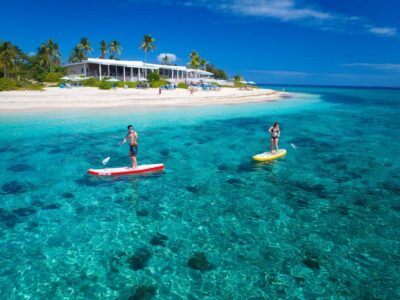
Malamala Beach Club Private Island Day Pass & Transfer
Read the full review →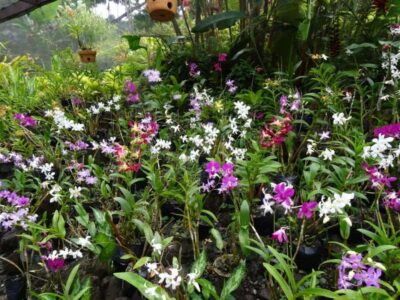
Garden Village Hot Spring & Temple Highlights Tour
Read the full review →
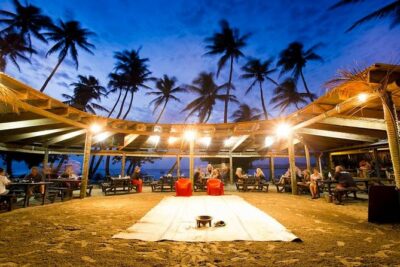
Robinson Crusoe Sunset Cruise Including Dinner, Cultural Show & Transfers
Read the full review →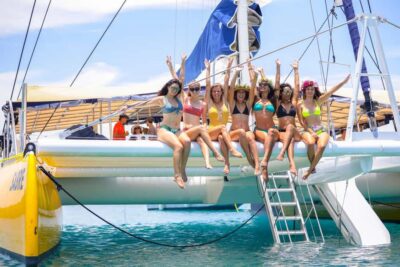
South Sea Sailing Experience with Lunch & Drinks
Read the full review →
Ultimate Encounter Snorkel with Sharks in Fiji
Read the full review →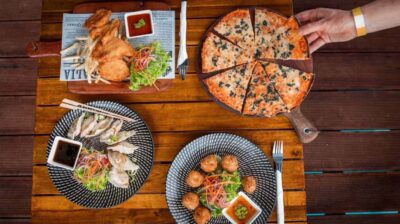
Browse the lists this tour appears in