
Reviewed · HIKING & TREKKING
ADVENTURE KOKODA 10-Day Premium Kokoda Campaign Trek Australian Led
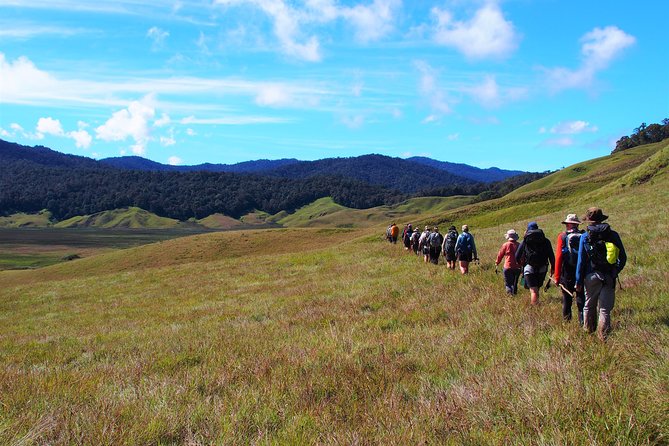
The most powerful part of this Kokoda trek is the way it joins a hard rainforest walk with the places where the 1942 campaign actually unfolded. You climb the Golden Staircase, inspect old weapon pits, cross the Moss Forest, and finish with a pre-dawn service at Isurava Memorial. This is not a casual jungle hike. It is a demanding military-history journey on foot.
I like the full south-to-north route, which gives you time to see major battle positions, logistic areas, Lake Myola, fire support sites, and the aircraft wreck. I also like the careful support system: a Koiari trek leader, local carriers, an Australian battlefield guide, satellite communications, camp equipment, and fresh meals. The main caution is simple: you need strong physical fitness, and the listed $3,443 price does not include a personal carrier, international flights, travel insurance, medication, or your own clothing and gear.
Key points before you commit
- The full wartime route takes about 12 days: The advertised trek name says 10-Day Premium, but the supplied schedule runs from Day 1 through Day 12.
- The Isurava Dawn Service is the emotional center: You rise at 4:30am for a 5:00am service at the memorial.
- Lake Myola gets proper time: Two nights at Bombers campsite allow a day to inspect both lakes and the crashed American P40 Kittyhawk.
- You receive serious logistical support: Tents, group gear, meals, vehicle transfers, permits, radios, satellite phone, and emergency links are included.
- The history is led from the track itself: Australian expedition leadership is paired with Koiari guides and carriers who know the route.
- The trip suits fit, committed hikers: Long climbs, muddy rainforest tracks, early starts, and basic campsites are part of the deal.
Why this Kokoda route feels different
Many historic sites are reached by road, bus, or a short walk from a car park. Kokoda is different. You approach the battlefield positions as the Australian soldiers did, on foot, through steep country where weather, fatigue, and supply problems shaped every decision.
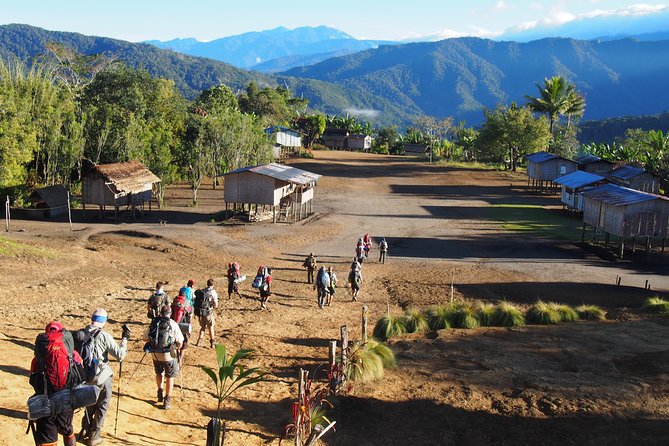
The first days move through the southern section from Owers Corner. You inspect a 25-pound artillery gun and wartime positions before reaching the Golden Staircase and Imita Ridge. The route is not just scenic background for a talk. The slopes explain why these ridges mattered and why movement was so slow.
Your Australian expedition leader provides the battlefield and campaign context, while a Koiari trek leader and local guide team handle route knowledge and camp support. Past groups have singled out leaders including Peter Morrison, Angelo, Jake Le, and Major Scott Babington. Names depend on the departure, so do not assume a particular person will lead your date, but the format gives you both military interpretation and local track guidance.
The group limit is 15. That is small enough for briefings and memorial services to feel personal, though it is still a group trek rather than a private walk.
More hiking tours in the Pacific Islands:
- Half-Day Guided Hike to Afareaitu Waterfall
★ 5.0 · 177 reviews - Private Breathtaking Koroyanitu Half Day Waterfall Hike
★ 5.0 · 49 reviews - Private Day Trip Hike and Boat in Moorea
★ 5.0 · 48 reviews
Day 1: Port Moresby, Sogeri Lodge, and the first briefing
You arrive in Port Moresby at 2:00pm and transfer to Sogeri Lodge. The trek briefing begins at 5:30pm, followed by dinner and introductions at 7:30pm.
This first evening matters because Kokoda requires more preparation than a normal holiday walk. You receive guidance on the route, gear, camp routine, and likely demands before setting out. The supplied schedule describes this as a long first day, so you should arrive ready for an early start rather than treating Port Moresby as a relaxed stopover.
Pre-trek hotel accommodation and meals are included on a twin-share basis. If you value a supported start, this removes some of the usual work involved in arranging a night before a remote trek.
Day 2: Owers Corner and the opening climb
The day begins at 5:30am. After breakfast, you leave Sogeri Lodge at 9:00am by bus for McDonald’s Corner, inspect the monument, and continue to Owers Corner.
At Owers Corner, you meet the guides and porters and inspect the 25-pound artillery gun. This is where the walking history begins in a direct way. You are not simply told that the route was a supply line. You see the sort of equipment that had to be moved through this country.
The early transfer also shows why vehicle support is useful. The trail itself is remote, while the transport links the lodge, monuments, and walking start without making you arrange separate local transfers.
Day 3: The Golden Staircase and Imita Ridge
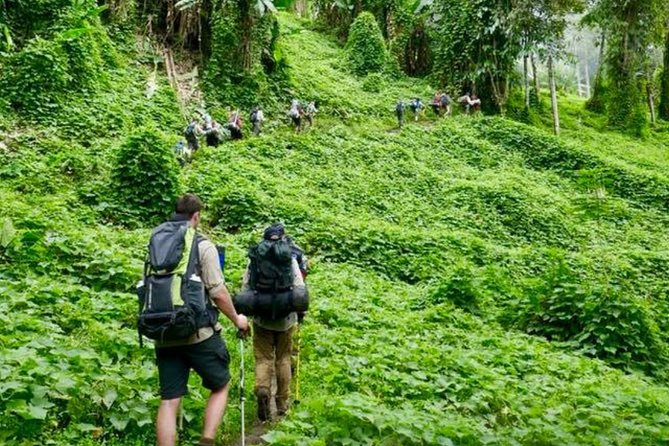
The route follows the wartime track to the Golden Staircase, then climbs to Imita Ridge at 860 metres above sea level. You inspect weapon pits at the Brigade position, set among the sheer rock face of Fortress Imita.
This is a day for pacing yourself. The climb may not be the highest on the trip, but steep rainforest tracks can feel harder than their altitude suggests. Your guide’s battlefield briefing gives the ridge a clear purpose: it was the last major Australian position before Port Moresby.
I like this early section because it establishes the pattern for the rest of the walk. You hike, stop at a military site, hear the campaign explained, then continue through the same difficult terrain that gives the story its force.
Same island, a completely different day on the water:
- Cruisin Fiji: Authentic Fijian Day Cruise – Best Day in Fiji
★ 5.0 · 2,409 reviews - From Palau: La Maddalena Archipelago Day Tour by Boat
★ 4.2 · 2,291 reviews - Moorea 6-Hour Snorkeling and Lunch Shared Tour
★ 5.0 · 1,758 reviews - Half-Day Muri Lagoon BBQ Lunch Cruise including Snorkeling
★ 5.0 · 1,518 reviews
Day 4: Maguli Range and Mogolonumu
The fourth day brings a grinding climb to the crest of the Maguli Range, known as Mogolonumu, at 1,335 metres. The route includes numerous false ridges, so the top may appear closer than it is.
Breakfast at Banana Camp breaks up the effort. You inspect Japanese delaying positions and take in broad views from the higher ground. This is a useful reminder that Kokoda is not a steady uphill walk. You gain height, lose it, and climb again, often on a track where the next ridge hides the real distance.
The schedule starts with a 6:00am briefing. Early starts are normal throughout the trek, and you should expect your day to be shaped by heat, rain, terrain, and camp routines rather than by a leisurely holiday timetable.
Day 5: Nauro Lookout and the Menari Gap
The morning starts at 5:00am as you trek to Hehomuri Creek, also called 5 Creeks, at the base of Ladavi Saddle. A sharp climb takes you to Nauro Lookout at 1,035 metres, followed by the Menari Gap in the saddle.
This section combines physical work with tactical geography. Ridges, saddles, creeks, and lookouts were not just names on a map. They controlled movement and offered defensive positions. The included 1:50,000 topographic map can help you follow the route in real terms.
A personal carrier is not included. If you hire one, the package includes a 75-litre backpack, but you must budget for that extra cost. If you carry your own load, the repeated climbs will feel harder, so this is a decision worth making before arrival.
Day 6: Efogi 2 Village and Japanese positions
You begin with a short trek down to Kavai Creek at 1,200 metres, then climb to Efogi 2 Village, also called Laununumu, at 1,385 metres. Here you inspect the Japanese monument erected by Corporal Nishimura and receive a battlefield briefing about the Japanese assembly area.
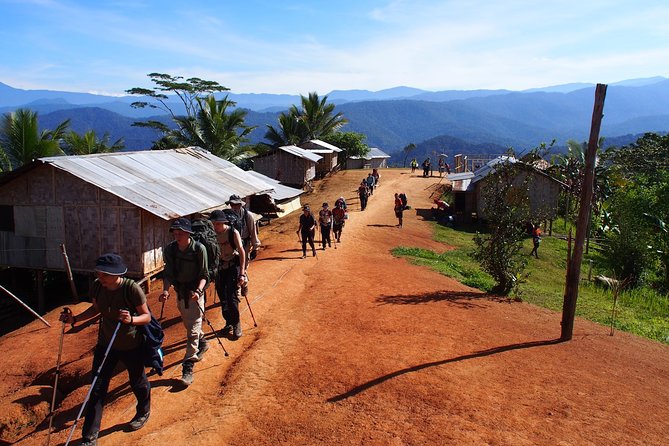
This is one of the places where local guidance matters. The track passes through communities and areas with names that can vary between wartime records, local usage, and modern maps. A Koiari leader helps connect the walking route with the people and places around it.
The inclusion of village campsite fees and local guide support means your payment contributes to the operating structure of the trek, rather than leaving you to negotiate each overnight stop on your own.
Days 7 and 8: Moss Forest, Lake Myola, and the high country
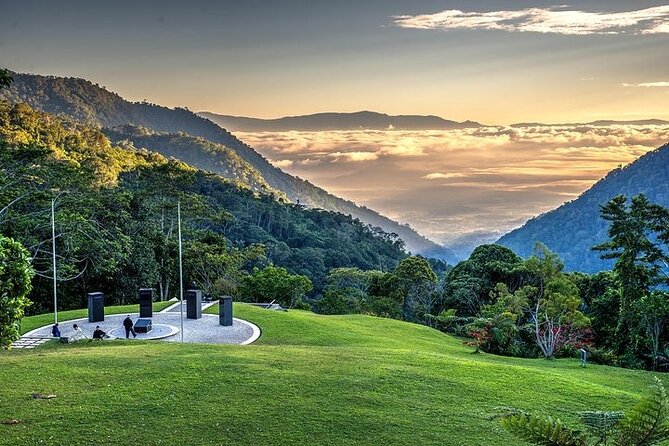
The route continues through the Moss Forest to Lake Myola 1, then across to Lake Myola 2. The second lake sits in a prairie-like volcanic crater discovered by Captain Bert Kienzle while searching for a route to the north.
The two-night stay at Bombers campsite is one of the strongest features of this trip. Instead of rushing through the lakes, you spend a day exploring both Myola areas and inspecting the American P40 Kittyhawk fighter aircraft that crashed on the northern edge of the lakes. You return to Bombers for a late lunch and a make-and-mend afternoon in the forest.
That rest day is not wasted time. It gives your body a break before the high section and lets the military story expand beyond battle ridges. Lake Myola was a major logistic area, so this stop helps you understand how food, equipment, and supplies were moved through the campaign.
On Day 8, you climb by the track cut by Captain Kienzle to the main Mount Bellamy track junction at 2,245 metres. You then continue down to Kokoda Gap at 2,190 metres, with views toward the Yodda Valley on the northern side.
These are among the highest parts of the walk. The climb is a serious test, particularly after several days of exertion, but it also gives the route its clearest sense of scale. You see how isolated the crossing points are and why supply and communication were so difficult.
Day 9: Vabula Ridge and the northern approach
The day begins at 7:15am. You trek to Vagebau Creek at 1,895 metres for morning tea, then reach the crest of Vabula Ridge at 1,905 metres before descending to a defensive position held by the 2/14th and 2/16th battalions.
The pattern now changes. You have crossed the high country and begin moving toward the northern end, but the route is not suddenly easy. Descents can punish tired knees, and wet ground can make footing uncertain. Your fitness needs to cover downhill movement as well as climbing.
The battlefield stop here is valuable because it shows how defensive positions were set out along the approach to Isurava. The guide’s explanation helps you read the ground rather than simply pass through it.
Day 10: The Isurava Dawn Service
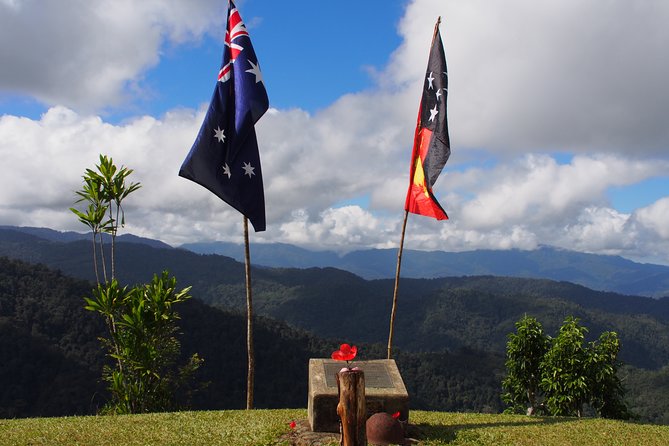
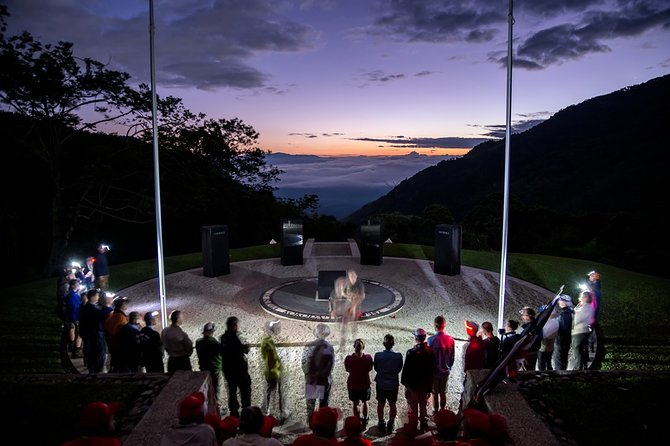
At 4:30am, you rise for the 5:00am Dawn Service at Isurava Memorial. A wartime briefing on the Battle for Isurava follows, and the service includes both trekkers and the PNG guides and carriers.
This is likely to be the most solemn part of the trip. You arrive on foot, after days of walking, rather than by coach. That effort changes the setting. The memorial is no longer an isolated stop on a sightseeing route. It is part of the journey you have just made through the same broad corridor of ridges and creeks.
After the service and an 8:00am briefing, you continue to Isurava Village at 1,360 metres via Etume and Ilole creeks. The day then carries on down the mountain. The schedule lists only four hours for this day, but the early start makes it feel full, and the physical effort of the route should not be underestimated.
Day 11: Kokoda and the end of the trail
You leave Hoi at 6:00am and trek to Kokoda at 395 metres via Kovello. Along the way, you inspect the plateau where the 39th Militia Battalion first met the Japanese and hear about the two battles for Kokoda.
At Kokoda, you visit monuments, memorials, and other sites connected with the campaign. Reaching the northern end gives the trek a proper finish. You have not merely walked a scenic section and turned around. You have followed the route across the mountains and arrived at the place that gives the track its name.
A private charter flight between Kokoda and Port Moresby is included. That saves a long return overland journey and gives the final day a clean change of pace.
Day 12: Returning through Port Moresby
The final morning begins at 6:00am. You check out of Sogeri Lodge at 9:00am and check in at the airport at 11:00am.
The schedule describes the experience as about 12 days, even though the product name uses 10-Day Premium Campaign Trek. Check the exact departure details before booking, especially if you are connecting with international flights. The safest plan is to avoid a tight onward connection and allow room for schedule changes.
What the $3,443 price covers
At $3,443, this is expensive compared with an independent walk, but it includes far more than a guide and a campsite. You receive:
- Twin-share accommodation and meals before and after the trek
- All trek and village campsite fees
- Vehicle transfers in Papua New Guinea
- A private charter flight from Port Moresby to Kokoda
- A personal mosquito-proof tent, carried and set up by the trek team
- Fresh meals prepared by the PNG cook
- An official Kokoda Track Authority permit
- A topographic map and group trekking equipment
- A group first aid kit and trained first aid support
- Satellite phone, two UHF radios, and a 24-hour link to Port Moresby
- Bomana War Cemetery and Isurava Dawn Service visits
- An Adventure Kokoda polo shirt and certificate
- A 15 percent Paddy Pallin discount on trekking equipment
The main extra is a personal carrier. You also pay for international flights, passport costs, anti-malarial medication, personal first aid items, clothing, equipment, and travel insurance.
I see the price as fair for someone who wants a fully supported historical expedition. It is less attractive if you already own remote-trekking equipment, prefer to carry your own load, and do not need the Australian battlefield leadership or charter flight.
Food, tents, safety, and daily comfort
You receive breakfast on 11 days, dinner on 11 days, and lunch on 10 days. Meals are prepared, cooked, and served by the PNG Boss Cook. One weakness to keep in mind is that food may not match everyone’s expectations, despite the promise of fresh meals.
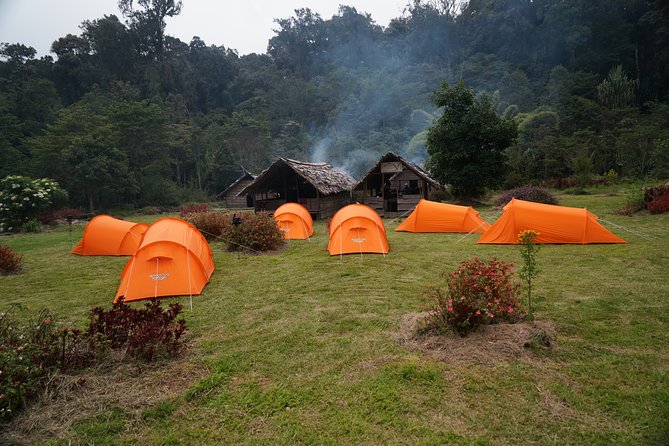
Your personal mosquito-proof tent is supplied and handled by the guides. That is a welcome service after a long day, particularly when rain or fatigue makes camp chores less appealing. You still need your own clothing and personal items, so do not mistake the included tent for a complete personal gear package.
The safety system is stronger than you will find on a casual independent trek. A trained first aid team, group kit, satellite phone, UHF radios, and a rear link to Port Moresby provide useful backup. They do not remove the physical risks of steep, remote walking, but they make the trip better organized.
Who should book this Kokoda trek?
I would choose this trip if you want the complete wartime route and care about the campaign context as much as the hiking. It suits people who enjoy early starts, military history, remote camps, and a group experience with a clear purpose.
It also works well for a parent and adult child or close friends who want a demanding shared challenge. One past group described the walk as becoming something they wanted to repeat, while another completed it with a daughter. That kind of response makes sense, but the physical demands should come first.
I would hesitate if you dislike basic camping, need a flexible daily schedule, or have not prepared for sustained climbs. The tour requires strong physical fitness, and the 15-person maximum does not change the fact that you will be walking through demanding country for many days.
The experience is mobile-ticketed and confirmation is provided at booking. Cancellation is free up to 24 hours before the local start time, though a minimum group size applies. Keep those terms in mind when coordinating flights.
Should you book Adventure Kokoda?
Book it if you want more than a rainforest trek. The private flight, full route, Lake Myola rest day, P40 Kittyhawk wreck, Isurava Dawn Service, battlefield briefings, local carriers, and Australian expedition leadership create a serious, focused experience.
Before paying, confirm the exact 10-day or 12-day schedule, ask who will lead your departure, decide if you need a personal carrier, and check that your fitness and gear are ready. If those points suit you, this is a strong choice for seeing Kokoda with structure, historical depth, and practical support.
FAQ
How long is the Kokoda experience?
The supplied schedule runs for 12 days, from arrival in Port Moresby on Day 1 to airport check-in on Day 12. The product name calls it a 10-Day Premium Campaign Trek, so confirm the exact dates for your departure.
Where does the experience start?
The listed meeting point is Jacksons International Airport in Port Moresby. The schedule then moves to Sogeri Lodge for the briefing and first overnight stay.
Where does the trek finish?
The walking route finishes at Kokoda on Day 11. You then take the included private charter flight back toward Port Moresby, and the final day ends with airport check-in.
Is a personal carrier included?
No. A personal carrier is an additional cost. If you engage one, a 75-litre backpack is included.
Are meals included?
Yes. The package includes breakfast on 11 days, dinner on 11 days, and lunch on 10 days. Fresh meals are prepared on the trail by the PNG cook.
Is accommodation included?
Yes. Twin-share hotel accommodation before and after the trek is included, along with village and trek campsite fees. A personal mosquito-proof tent is also supplied for each trekker.
Is the Isurava Dawn Service included?
Yes. The schedule includes a 5:00am Dawn Service at Isurava Memorial on Day 10, along with a wartime briefing about the Battle for Isurava.
Does the tour visit Lake Myola?
Yes. The route includes Lake Myola 1 and Lake Myola 2, with two nights at Bombers campsite. You also inspect the crashed American P40 Kittyhawk near the lakes.
What is not included in the price?
International flights, passport costs, anti-malarial medication, personal carrier fees, personal and first aid items, clothing, equipment, and travel insurance are not included.
How many people can join the group?
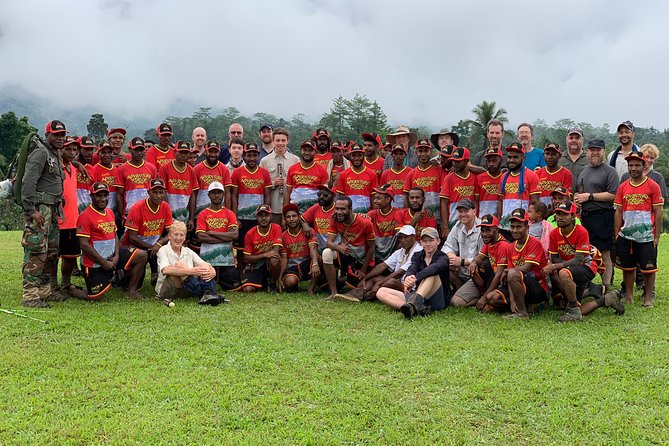
The maximum group size is 15 people. The experience also includes a Koiari trek leader, local guides and carriers, and a specialist Australian expedition leader.
Can I cancel for a refund?
You can cancel at least 24 hours before the local start time for a full refund. Cancellations or changes made less than 24 hours before the start are not accepted for a refund.
Just added around the Pacific Islands
- Upolu: Private Tour – Beach, Waterfall & Ocean Trench★ 5.0 · 3 reviews
- iconic waterfall tour★ 4.5 · 12 reviews
- Yasawa Islands Explorer Cruise with Lunch★ 3.5 · 26 reviews
- Round The Island Day Trip Fiji- Viti Levu★ 5.0 · 17 reviews
- Ultimate Shark Encounter Two Tank Dive at The World Famous Beqa Lagoon★ 5.0 · 18 reviews
- Waterfalls and Nature Tour★ 4.5 · 9 reviews
- Discover Fiji Best Sights Tour from Lautoka wharf Cruise Ships★ 4.0 · 5 reviews
- Skydive Fiji Radical 10000ft Tandem Jump (30 seconds free fall)★ 5.0 · 12 reviews
Hiking & Trekking, compared.
Half-Day Guided Hike to Afareaitu Waterfall
Read the full review →
Private Breathtaking Koroyanitu Half Day Waterfall Hike
Read the full review →
Private Day Trip Hike and Boat in Moorea
Read the full review →
Small Group Hiking Adventure – Hidden Peaks
Read the full review →
Nguna Island Full Day Hike and Snorkeling Adventure from Port Vila Vanuatu
Read the full review →
Private Half-Day Hike in the Opunohu Valley in Moorea
Read the full review →
Koroyanitu National Heritage Park Fiji – Hike – Waterfall
Read the full review →
Private Tour: Hot spings & Sleeping Giant Garden hiking Adventure
Read the full review →Browse the lists this tour appears in