
Reviewed · TAHITI TOURS
Whale watching on the preserved and quiet coast of Paea (Pk26)
The best part of this Tahiti outing is the setting: Paea and Papara’s quiet coast sees less boat traffic than the island’s busier areas. You search for humpback whales in open water, listen to male whale calls through an onboard system, and may enter the sea under close supervision if the animals and conditions allow.
I like the small-boat feel of the 28-foot Stenella and the clear attention to responsible whale watching. I also like that you can choose a six-swimmer boat, a larger 12-swimmer option, or a private boat. The main caution is simple: whale sightings and swimming are never guaranteed, and the water entry requires more strength than a casual snorkel.
Key things to know before booking
- The boat leaves from PK27 in Paea, with no hotel pickup, office, or changing room at the meeting point.
- The four-hour outing searches between Paea and Papara, a quieter part of Tahiti’s coast.
- Swimming with whales depends on the guide, weather, sea conditions, and DIREN approach rules.
- You must swim at least 200 meters with fins, mask, and snorkel to enter the water.
- Children under 10 cannot swim with the whales, though the boat options include observers.
- The price is $205.27 per person, and confirmation normally arrives within 48 hours rather than instantly.
Why Paea and Papara make a good whale-watching base
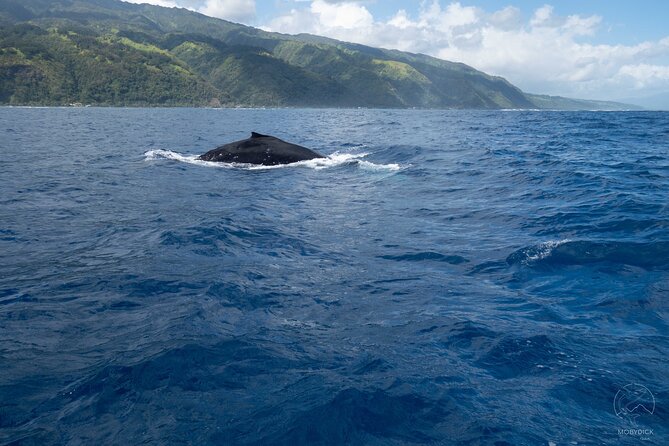
Tahiti’s western coast gives this trip a calmer feel than a standard harbor excursion. You meet at PK27 in Paea and head toward the waters between Paea and Papara, an area described as still relatively untouched and lightly visited.
That matters because whale watching works best when the boat can move patiently and give the animals room. You are not heading to a fixed aquarium-style viewing point. The crew must search, listen, and wait for signs of humpback activity.
The setting also gives the trip a useful sense of place. You are looking out from a preserved coastal area rather than spending the morning in a line of tour boats. There is no promise that a whale will appear on cue, but the quieter setting supports the respectful approach that this activity requires.
The route can take time. One outing reached a whale about an hour after leaving and later found a mother with a calf. That is a good reminder to keep the schedule open and not judge the first part of the trip too quickly.
More Whale Watching in Tahiti
- Respectful whale excursion to Tahiti in 4h30
★ 4.5 · 123 reviews - Tahiti island: Whale watching Experience
★ 4.2 · 79 reviews - Guided Small Group Whale Watching and Swim Tour Tahiti
★ 5.0 · 57 reviews
Boarding the Stenella at PK27
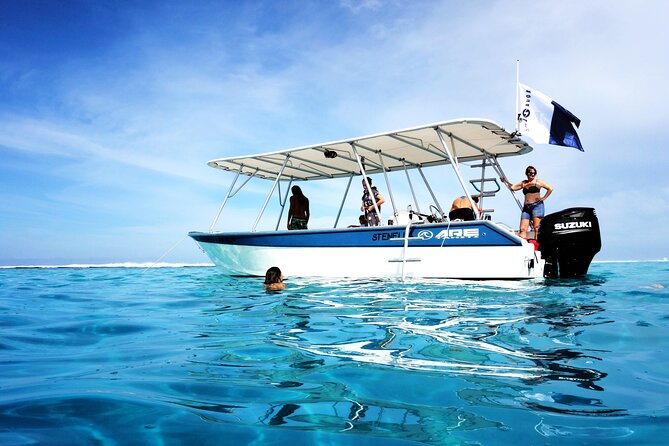
The Stenella is a modern 28-foot boat described as comfortable and spacious for this type of outing. The activity allows a maximum of 12 people, with different arrangements based on how many people want to swim.
You should arrive ready to board. There is no office, changing room, or dedicated facility at the meeting point, and the operator does not provide hotel pickup. Bring what you need with you, including sun protection, rain protection, and any personal medication for seasickness.
The stated meeting time is not necessarily the exact time the boat leaves. The crew needs to fit equipment, give a safety briefing, and explain whale biology before departure. One timing complaint came from a person who expected an earlier departure, but the operator clarified that the listed time was the meeting time. Plan for this preparation instead of treating it as wasted time.
Equipment is available if you do not have your own snorkeling gear. Still, bring your own mask and snorkel if you rely on a particular fit. The swim requirement makes comfortable equipment important.
The four-hour search for humpback whales
Once the boat is underway, the main task is finding whales in a large area of ocean. Your guide and captain search for signs of activity and decide how close the boat can safely and legally approach.
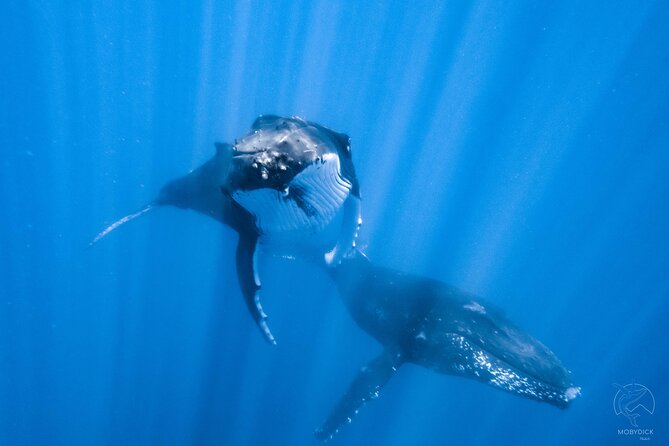
The guides explain whale biology along the way. An onboard listening system can broadcast the calls of male humpback whales, adding something you cannot get from a quick surface sighting. The sound helps you understand that the whales are communicating below and around the boat, even when only a back or blow is visible.
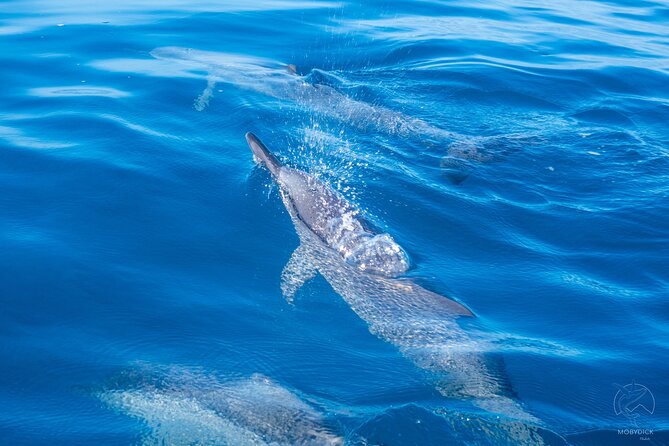
You may also see other marine life. One outing at the end of the migration season included four humpback whales, two groups of dolphins, a gray shark, and flying fish. None of these sightings is promised, but they show why the boat ride itself can be rewarding even when the whales stay distant.
The sea can change quickly. One account described a rough ride back to shore, though the captain, Isabel, handled the return well. If you are prone to seasickness, ask your pharmacist about suitable medication before the trip. Take this advice seriously, especially if you are unsure how you handle open water.
Watching whales without rushing them
The operator follows approach rules set by DIREN, French Polynesia’s Regional Directorate for the Environment. In practical terms, this means the boat does not simply charge toward every whale and drop swimmers into the water.
The guide decides how the boat approaches and if a water entry is appropriate. The animal’s behavior, distance, weather, sea state, and other conditions all matter. Even after locating whales, you may remain on the boat if the guide feels swimming would be unsafe or disruptive.
That restraint is one of the strongest features of the experience. You are not buying a guaranteed swim. You are paying for time on the water with a crew that must make careful decisions around wild animals.
The most memorable moments may be brief. You might see a whale surface, show its back, and disappear again. One person described seeing the whale submerge and emerge below in deep water, without even taking a photograph because the camera battery had died. That is a useful lesson: bring a charged camera, but do not let the camera become the main event.
Same island, a completely different day on the water:
- 5 Hours Tahiti Island Tour – West and East Coast
★ 5.0 · 1,020 reviews - Crossing Island of Tahiti 4×4 Mountain, Waterfall, River, Basins
★ 4.5 · 532 reviews - Découvrez le Mana durant la traversée de Tahiti en 4×4 Safari
★ 5.0 · 456 reviews - Moorea Street Food Tour
★ 5.0 · 410 reviews
Three boat choices, and who each suits
The operator offers three arrangements. Your choice affects cost, space, and how easily you can enter the water.
Boat for six swimmers plus observers: This is the best choice if the swim is your main reason for booking. A smaller swimming group gives the crew more room to manage entries and lets you spend less time waiting for other swimmers.
Boat for up to 12 swimmers: This option is aimed at people watching their budget. If more than six people want to enter the water, the crew uses a rotation system. That can work well, but you may spend part of the whale encounter waiting for your turn.
Private boat for one to 12 people: A private booking gives your group the boat to itself, subject to the same safety and wildlife rules. It may make sense for a family or group that wants more control over the pace, though the supplied price is listed per person for the standard experience, not as a private charter quote.
All three options can include people who only want to observe from the boat. You do not need to swim to take part, but the guide controls all water entries.
The swim is demanding, not a casual photo stop
The written requirement is that you must be able to swim at least 200 meters with fins, a mask, and a snorkel. That is a meaningful fitness test, especially in open water and changing conditions.
One person felt the swimming challenge was harder than the advertising suggested, noting the need to move quickly with fins. You should treat that warning as practical advice. If you are comfortable only in a pool or calm lagoon, the whale swim may not suit you.
The guide can refuse swimming at any time based on conditions. That decision protects you, the crew, and the whales. It also means you should book this as a whale-watching trip first and a swimming trip second.
Children under 10 are not allowed to swim. The information says most people can participate, but it does not promise that every person will be cleared for the water. If some members of your group want to swim and others do not, confirm which boat arrangement fits your group before booking.
What the experience is worth at $205.27
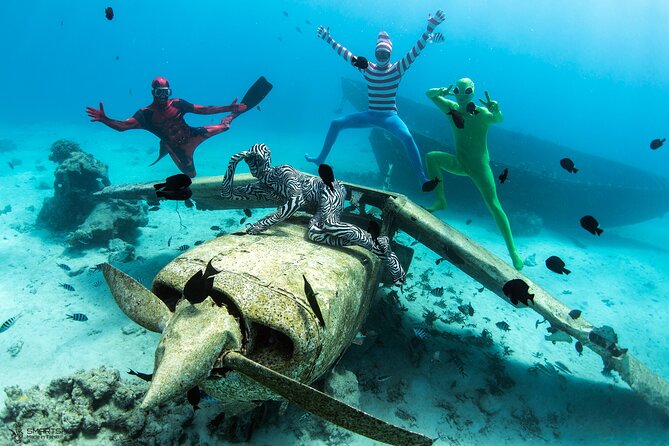
At $205.27 per person, this is not a cheap sightseeing cruise. Its value depends on what you want from a whale trip.
You are paying for about four hours, a small modern boat, snorkeling equipment if needed, guide support, a whale-listening system, and access to a quieter stretch of Tahiti’s coast. You are also paying for the chance to encounter humpbacks in the sea rather than viewing captive animals or following a rigid route.
The value is strongest for someone who cares about a careful approach and wants the possibility of entering the water. The price feels harder to justify if you want a guaranteed whale sighting, a guaranteed swim, or a relaxed lagoon snorkel.
I would compare it with your wider Tahiti budget. If this is your one major marine activity, the cost may be worthwhile because the outing can include whales, dolphins, flying fish, and other sightings. If you are already booking several boat trips, remember that this one remains weather-dependent and wildlife sightings cannot be promised.
The 95 percent recommendation rate and 4.8 rating from 40 ratings suggest a strong overall record, but the lower scores point to the areas that need careful attention: departure expectations, swimming fitness, and the possibility that conditions prevent a swim.
Weather, language, and comfort on the water
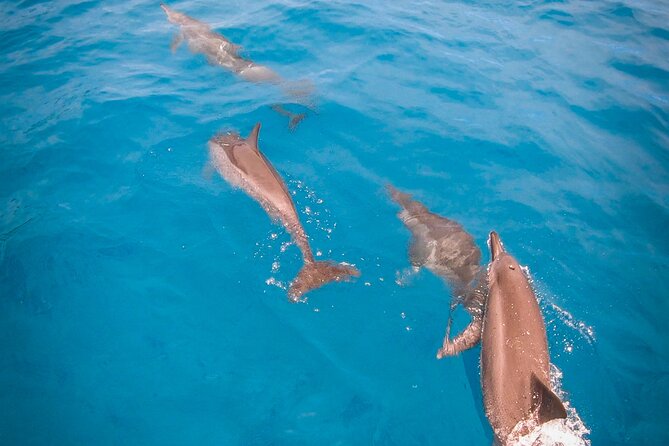
Tahiti’s weather can change fast, and the operator specifically advises bringing both sun and rain protection. Pack a hat, sunscreen, a light rain layer, and a way to protect your phone or camera.
The boat is described as spacious, but open-water comfort varies from person to person. Seasickness medication is worth considering if you are sensitive. The return journey may feel rougher than the outward ride.
The briefing is normally offered in English when English-speaking participants are present. One person found the tour to be in French, while the operator stated that the usual briefing is in English for English-speaking groups. If language is important to your decision, confirm it when your booking is validated.
Confirmation is not automatic. The operator checks availability and normally confirms within 48 hours. If your schedule is tight, do not assume that paying online means the place is immediately secured.
How to prepare for a better outing
Keep your preparation simple:
- Arrive at PK27 with sun and rain protection already packed.
- Wear or bring swim clothing, since there is no changing room.
- Bring a charged camera and spare power if you have it.
- Use the provided snorkeling gear or bring equipment you know fits well.
- Consider seasickness advice before the day of the trip.
- Be honest about your ability to swim 200 meters with fins, mask, and snorkel.
- Allow the full four hours, including the briefing and equipment setup.
- Expect the guide to change the plan if the whales, weather, or sea conditions require it.
The most important mental preparation is accepting uncertainty. A whale may surface close by, stay far away, or never appear during your outing. The crew can search well, but it cannot control wild animals.
Who should book this Paea whale trip
I would recommend it to confident swimmers, wildlife-minded visitors, and anyone who prefers a smaller coastal operation over a crowded boat ride. It is also a strong fit for people who want to hear whale calls and learn about whale behavior, not just take a quick photograph.
It suits a mixed group if some people want to swim and others are happy to watch. The six-swimmer option is better for a group focused on water entry, while the 12-person option can reduce the cost if you accept a rotation.
I would hesitate to recommend it to anyone who needs a guaranteed result. It is not ideal for a person who dislikes open water, struggles with seasickness, cannot swim the required distance, or expects a calm lagoon outing.
Should you book it?
Book this experience if you want a serious chance to see humpback whales along a quieter part of Tahiti and you accept that nature sets the schedule. The guide’s careful approach, whale-call system, small boat, and possible supervised swim give it real substance beyond a standard sightseeing ride.
Before paying, confirm availability, check the language of the briefing, and choose the boat option that matches your group. Most of all, book it for the whale encounter, not the promise of getting into the water. If the sea is calm and the whales cooperate, the result can be extraordinary. If they do not, you still need to be comfortable with a four-hour search at sea.
FAQ
Where does the whale-watching tour start?
The meeting point is at PK27 in Paea, French Polynesia. The tour ends back at the same meeting point.
Is hotel pickup included?
No. The operator does not provide pickup service.
How long does the experience last?
The outing lasts approximately four hours, including the preparation and time on the water.
Are whale sightings guaranteed?
No. Humpback whales are wild and unpredictable, so sightings are not guaranteed.
Is swimming with the whales guaranteed?
No. The guide decides if swimming is safe and appropriate based on conditions and the DIREN approach rules.
How fit do I need to be to swim?
You must be able to swim at least 200 meters while wearing fins, a mask, and a snorkel. The guide may still refuse a water entry based on conditions.
Can children swim with the whales?
Children under 10 years old are not allowed to swim with the whales.
Is snorkeling equipment provided?
Yes. Snorkeling equipment is provided if you do not have your own.
Just added around Tahiti
- Small group snorkeling (5 people max): wrecks & tropical fishes at 3:30pm★ 5.0 · 7 reviews
- Wholesale Fishing in Poti Marara at Tahiti Teahupoo Peninsula★ 5.0 · 4 reviews
- Small group snorkeling (5 people max): Turtles at 7:30am★ 5.0 · 40 reviews
- Whale Watching Activity★ 5.0 · 8 reviews
- Taxi Boat to Watch the Teahupoo International Surfing Competition★ 4.5 · 13 reviews
- Private Tours of Tahiti by Lydia. Full or Half Day★ 5.0 · 46 reviews
- Tahiti Full Day Private Coastal Tour★ 5.0 · 16 reviews
- Teahupoo Olympic Wave Journey★ 5.0 · 6 reviews
Tahiti Tours, compared.

5 Hours Tahiti Island Tour – West and East Coast
Read the full review →
Crossing Island of Tahiti 4×4 Mountain, Waterfall, River, Basins
Read the full review →

Unique Tahiti Tour – personalised, small group east coast tour
Read the full review →

Unique Tahiti Tour – personalised, small group west coast tour
Read the full review →
Browse the lists this tour appears in