
Reviewed · TAHITI TOURS
Papeete Food & City Tour
Papeete’s best introduction may be a plate of raw fish in coconut milk, followed by a Tahitian pastry, a fish fritter, mango with plum powder, and a stop at the municipal market. This small-group food walk uses local eating habits to explain how Polynesian, French, and Chinese cooking meet in daily life.
I like the generous range of tastings, and I like that guides such as Kalei and Orama add local stories rather than simply pointing out dishes. The tour also works well on a port stop because it covers food, the market, and several central sights in about three and a half hours.
The main caution is simple: come hungry, wear good walking shoes, and do not expect much help if you have strict dietary limits. The schedule packs in many samples, and some food is shared or served in casual market settings.
Key points to know before booking
- Six to eight tastings: Expect enough food to replace a light breakfast, with samples ranging from coconut-marinated fish to pastries, fruit, drinks, and local street food.
- A true small-group format: The maximum is eight people, so your guide can adjust the pace and answer questions.
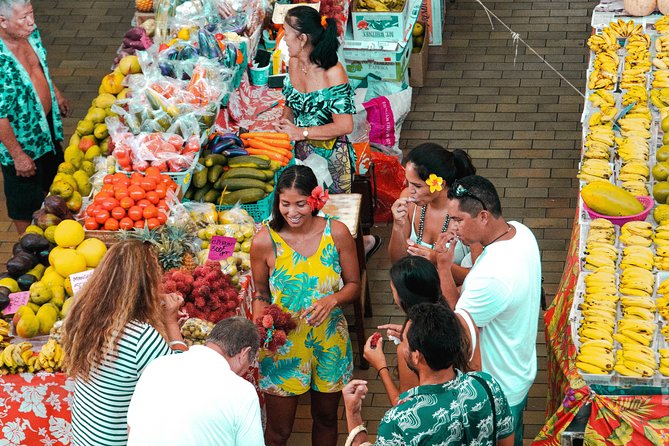
- Papeete Market is the heart of the walk: You will see where locals shop for seasonal produce, fish, and other everyday foods.
- A Polynesian, French, and Chinese food mix: The tour explains Tahiti through the way these cuisines share the same table.
- A walking tour with a full stomach: Comfortable shoes matter, and the route includes stops where you can sit, rest, and eat.
- Useful for a short stop in Papeete: The tour begins near Rue Paul Gauguin and finishes at Cafe Maeva in the municipal market.
Why food is the best way to meet Papeete
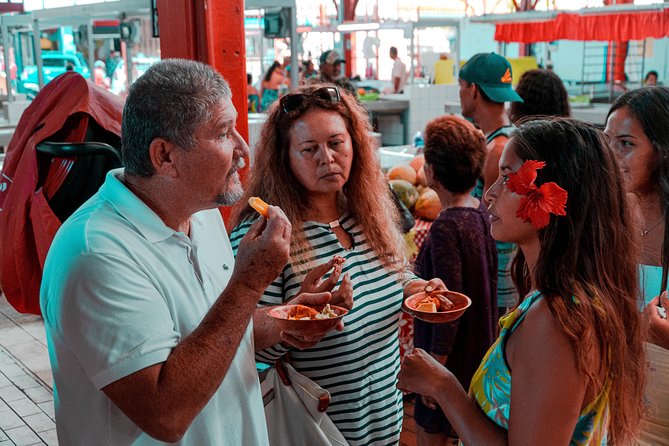
Papeete can be easy to pass through too quickly. You may see the waterfront, take a quick look at the market, and leave without understanding how people eat and shop here. This tour gives the city a practical frame: start with breakfast, follow the food through the streets, then end among market stalls and local produce.
That approach matters in Tahiti. The food reflects more than one tradition. Polynesian ingredients and methods meet French baking and café habits, while Chinese influence appears in the city’s food shops and everyday cooking. You are not simply tasting isolated dishes. You are seeing how different parts of Papeete’s past and present show up on a plate.
The format is friendly to first-time visitors. Guides including Kalei and Orama are described as closely connected to local businesses and communities, which can make the stops feel more natural than a standard sightseeing route. Kalei, in particular, is praised for adjusting the pace and shaping the morning around the group’s needs.
The tour is limited to eight people. That number is small enough for questions and personal attention, but it does not promise a private tour. If you want a quiet, highly structured tasting menu, this is not that. It is a walking introduction to local food, served in the places where people actually buy and eat it.
More food and market days in Tahiti:
- Moorea Street Food Tour
★ 5.0 · 410 reviews - Papeete Food Tour
★ 5.0 · 80 reviews - Fiji: Day Trip to Cloud 9 Floating Platform Including Food and Beverages
★ 4.5 · 450 reviews
Starting with Tahitian breakfast
The morning begins at Terre de vigne on Rue Paul Gauguin in Papeete. The first tastings may include coffee with coconut milk, beignets, raw tuna in coconut milk, carrots and cucumber, taro, plantains, and a traditional Tahitian pastry.
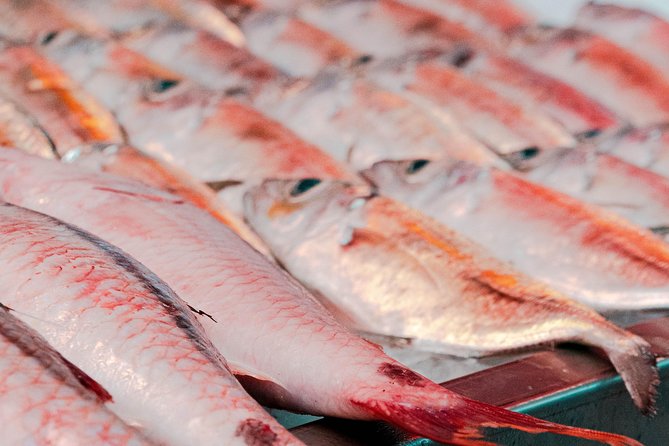
For many people, the fish in coconut milk will be the first serious surprise. It is a useful introduction because the dish shows how fresh fish and coconut appear in Tahitian food without being dressed up for a formal restaurant. The combination of cool fish, coconut, and vegetables makes a very different start to the day from a continental breakfast.
You may also encounter a local pastry or beignet early in the walk. One fish fritter has been compared to a potato scallop or fish cake, which gives you a rough idea of its texture but not its flavor. These small contrasts are part of the fun: familiar shapes can carry ingredients and seasoning you may not expect.
I recommend eating only a very light breakfast before you arrive. Coffee alone may be the sensible choice if you want to sample everything. The food is not presented as one large meal, but six to eight tastings add up quickly.
Papeete Market and the local shopping day
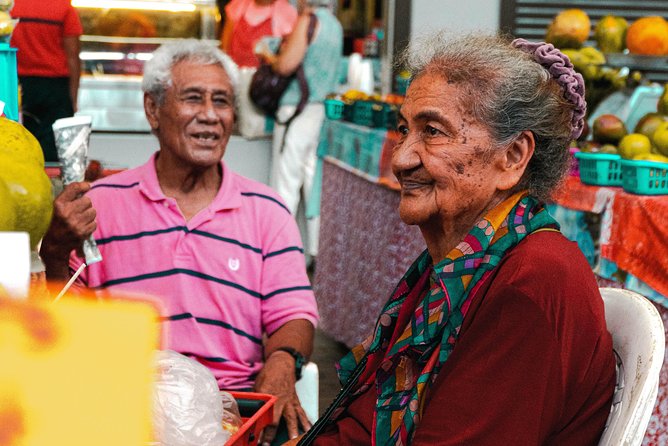
The municipal market, or matete in Tahitian, is the center of the experience. This is where local shoppers go for seasonal fruit, vegetables, and fish, and it gives you a better sense of daily life than a row of souvenir shops.
Your guide explains the produce and the food traditions that have become part of Tahitian culture. Depending on the day and the available vendors, you might see or taste fruit, fish, prepared foods, and snacks. The tour’s strength is that the market is not treated as a photo stop. It is used to explain what people buy and how ingredients fit into local meals.
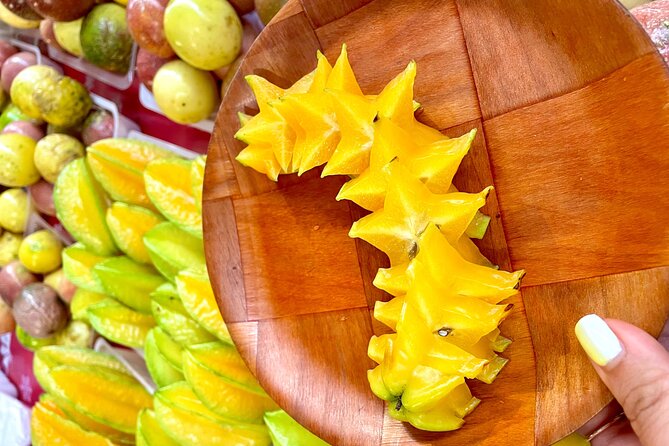
One tasting highlighted by the food walk is mango with red plum powder. It is a small, sharp, sweet-and-sour snack, but it comes with a practical warning: the powder can be messy and difficult to remove. Bring wipes and avoid wearing white clothing if you want to stay tidy.
The market can also be a good place to ask about plants and ingredients. One guide, Orama, is praised for explaining the local plants as well as the dishes. That kind of detail helps connect the food on the table with the produce around you.
The final stop is Cafe Maeva, also at the municipal market. Finishing there is convenient if you want to keep shopping, eat more, or continue exploring Papeete on your own. The stated end point is not a return to the starting location, so plan your next step from the market.
Street food, family shops, and mixed influences
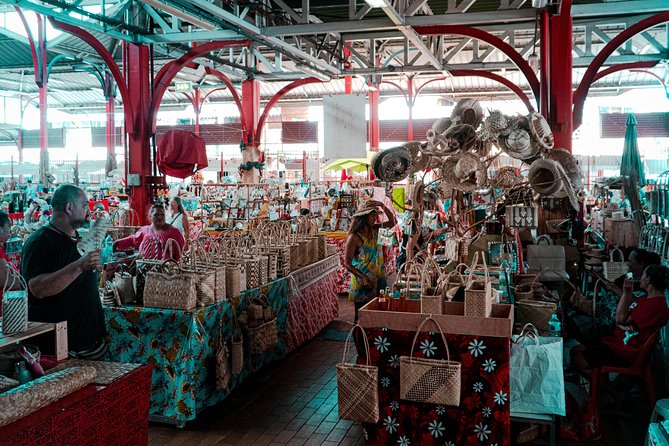
The route includes several local food stops beyond the market. A stop at Lucky Luke may feature beignet de poisson, a fish-based fritter. Another highlight is a burger from Vini Vini, described as combining local flavors in one filling bite.
These stops show why this tour is more useful than a simple list of traditional dishes. Tahitian food in Papeete is not frozen in the past. Local ingredients appear in French-style pastries, Chinese-influenced dishes, casual snacks, and modern street food. You get a look at how a city eats now.
The walk may also include a shop that has served the community for more than a century and remained in the same family. That is the sort of stop I value because it gives the food a human setting. You are not only told that a place is old. You can see how a long-running business fits into the life of the city.
Portions are generally tasting-sized, not full restaurant plates. That is good for variety, but do not expect to choose a single large meal. Some food may be cut or shared as the group moves along. One practical point is worth noting: a serving can be handled casually in a market setting rather than plated with restaurant formality.
The experience includes coffee or tea and bottled water. Alcoholic drinks are not included. One food walk may finish with the option of a cold beer, but you should treat alcohol as an extra rather than part of the published inclusions.
Same island, a completely different day on the water:
- 5 Hours Tahiti Island Tour – West and East Coast
★ 5.0 · 1,020 reviews - Crossing Island of Tahiti 4×4 Mountain, Waterfall, River, Basins
★ 4.5 · 532 reviews - Découvrez le Mana durant la traversée de Tahiti en 4×4 Safari
★ 5.0 · 456 reviews - Unique Tahiti Tour – personalised, small group east coast tour
★ 4.5 · 314 reviews
The walking route and the city sights
Food takes up most of the three and a half hours, but the tour also uses Papeete’s central landmarks to add context. At Notre-Dame Cathedral, you can visit both the inside and outside and hear a short explanation of its history.
The cathedral stop is brief, about ten minutes. That is enough for a look and a few facts, not a full architectural visit. If you want extended time inside, you may need to return after the tour.
The route also passes the Assemblee de la Polynesie Francaise and the main entrance of the presidential palace. The palace visit is from the outside, with about five minutes at the entrance. This is a quick orientation point rather than a formal tour of government buildings.
Those short stops work well because they break up the food walk without taking over the morning. You see a little of Papeete’s public and religious center, then return to the main subject: how the city eats. The tour may pass another point of interest with the option to visit after the walk, but the supplied details do not identify that stop, so do not book this expecting a full sightseeing circuit.
There is a fair amount of walking. Several people who have taken the route describe resting at food stops, but you should still wear comfortable shoes. Papeete’s downtown area is compact enough for a walking tour, yet three and a half hours on your feet can feel long in warm weather.
What the guide adds
The guide can make or break a food walk, and this experience depends heavily on that personal connection. Kalei is repeatedly singled out for being friendly, flexible, and well regarded by the proprietors at the places visited. He is also praised for handling a group with different needs.
Orama is another named guide associated with the tour. Her passion for Polynesian culture and ability to explain local food and people add another style to the experience. Guides may vary, but the central promise is personal interpretation, not a recorded audio route.
I like the way this format encourages conversation. You can ask why a dish is prepared in a certain way, how a fruit is used, or how French and Chinese influences reached the local table. The best moments are likely to come between tastings, when the guide connects the food to ordinary life.
The small group helps here. With no more than eight people, you have a better chance of hearing the explanations and asking about ingredients. It also means the pace can be adjusted, although the tour still needs to reach its planned stops within the available time.
Is the $130 price fair?
At $130, this is not a cheap way to grab breakfast. It is better judged as a guided city experience that includes food, drinks, local interpretation, and a compact introduction to Papeete.
The value is strongest if you would otherwise spend your first morning guessing where to eat and how to navigate the market. Six to eight tastings can cover a wide range of food, and you also get coffee or tea and bottled water. The small group adds value for people who want questions answered rather than simply handed a printed food list.
The price is less attractive if you have strict dietary restrictions, do not eat fish or coconut, or prefer to choose every dish yourself. The tour is built around preselected tastings, and the exact food may depend on what is available that day. Alcohol is extra, too.
For a short stop in Papeete, I think the cost can make sense. You finish with a better idea of what to order later, where the market is, and how the city’s food culture fits together. You also avoid spending half a day searching for places on your own.
Who should book this food walk?
I would choose this tour for a first morning in Tahiti, especially if you are staying near central Papeete or have a short stop in the city. It gives you useful bearings, a broad food sample, and enough history to make the downtown area more meaningful.
It suits people who enjoy trying unfamiliar dishes and do not need every stop to feel polished. Foodies, curious eaters, and anyone who likes talking with a local guide should get the most from it.
I would be more cautious if you have severe food allergies, a strict diet, limited walking ability, or a strong preference for a late start. The published schedule shows a Monday morning window from 9:00 a.m. to 12:30 p.m., and the tour itself is designed around morning eating.
Service animals are allowed, and the meeting point is near public transportation. Confirmation is sent within 48 hours, subject to availability. The experience requires good weather and a minimum number of participants. If poor weather or low enrollment cancels it, you are offered another date or a full refund.
Cancellation is free up to 24 hours before the start time. Changes or cancellations inside that window are not refunded.
Should you book the Papeete Food and City Tour?
Book it if you want to understand Papeete through ordinary food rather than only through landmarks. The strongest reasons are the market setting, the range of small tastings, and guides such as Kalei and Orama who connect dishes with local culture.
Skip it if you need a highly controlled menu or cannot manage several hours of walking and repeated samples. For everyone else, this is a practical first look at Tahiti: come with a light breakfast, comfortable shoes, an open appetite, and a few wipes for the mango powder.
FAQ
How long does the Papeete Food and City Tour last?
The tour lasts approximately 3 hours and 30 minutes.
How much does the tour cost?
The listed price is $130.
How many people can join the tour?
The maximum group size is eight people.
Where does the tour start?
The tour starts at Terre de vigne on Rue Paul Gauguin in Papeete, French Polynesia.
Where does the tour finish?
The tour finishes at Cafe Maeva at Papeete’s municipal market.
How many food tastings are included?
About six to eight preselected tastings are included.
Are drinks included?
Coffee or tea and bottled water are included. Alcoholic beverages are not included.
Does the tour visit Papeete’s cathedral and government buildings?
Yes. You can visit inside and outside Notre-Dame Cathedral for about ten minutes. The tour also visits the outside and main entrance of the Assemblee de la Polynesie Francaise and the presidential palace area for about five minutes.
Can I cancel for a full refund?
Yes, if you cancel at least 24 hours before the experience begins. Cancellations made less than 24 hours before the start time are not refunded.
Just added around Tahiti
- Wholesale Fishing in Poti Marara at Tahiti Teahupoo Peninsula★ 5.0 · 4 reviews
- Small group snorkeling (5 people max): wrecks & tropical fishes at 3:30pm★ 5.0 · 7 reviews
- Small group snorkeling (5 people max): Turtles at 7:30am★ 5.0 · 40 reviews
- Whale watching on the preserved and quiet coast of Paea (Pk26)★ 5.0 · 40 reviews
- Whale Watching Activity★ 5.0 · 8 reviews
- Taxi Boat to Watch the Teahupoo International Surfing Competition★ 4.5 · 13 reviews
- Private Tours of Tahiti by Lydia. Full or Half Day★ 5.0 · 46 reviews
- Tahiti Full Day Private Coastal Tour★ 5.0 · 16 reviews
Tahiti Tours, compared.
5 Hours Tahiti Island Tour – West and East Coast
Read the full review →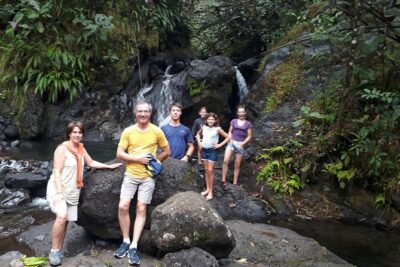
Crossing Island of Tahiti 4×4 Mountain, Waterfall, River, Basins
Read the full review →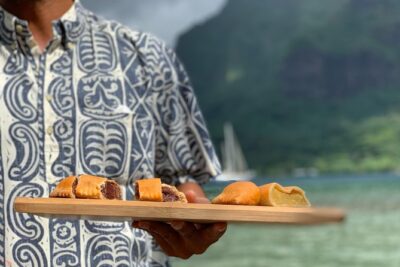

Unique Tahiti Tour – personalised, small group east coast tour
Read the full review →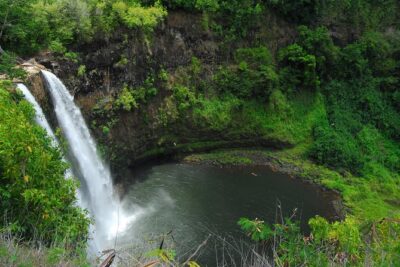

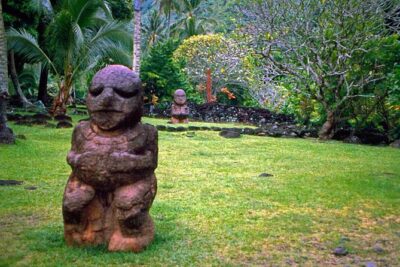
Unique Tahiti Tour – personalised, small group west coast tour
Read the full review →
Browse the lists this tour appears in