
Reviewed · TAHITI TOURS
Papeete Walking Tour – Tahiti
Papeete makes more sense once a local explains what you are seeing. On this two-hour private walk, Christian connects the market, civic buildings, churches, and streets to Tahiti’s past and present. His family stories, including a connection to a traditional seamstress shop, add a personal touch you will not get from a guidebook.
I especially like the local perspective and the useful mix of history, politics, shopping, and food advice. The guide also takes the heat seriously, using shade, umbrellas, fans, and water stops when needed. The main drawback is practical: parking near the tourist office can be awkward, and this is a walking tour in warm weather, so you need sensible shoes, water, and a moderate level of fitness.
Key points to know before you book
- Christian gives the tour a personal Papeete connection, sharing family stories and places tied to his life in the city.
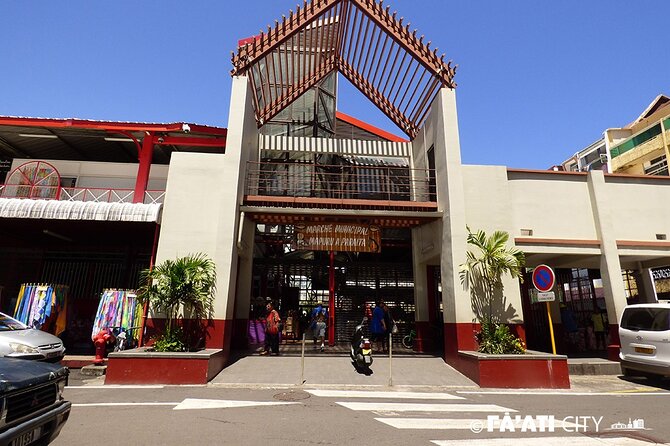
- The municipal market is the strongest cultural stop, with a chance to put local food, crafts, and daily routines into context.
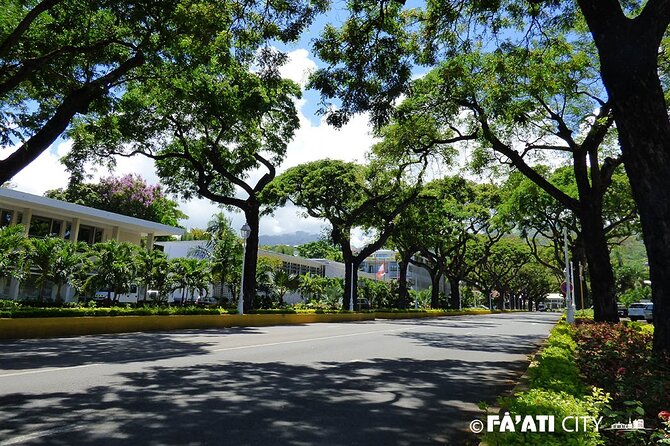
- The route includes civic buildings, including Mairie de Papeete and the French Polynesian Assembly grounds when they are open.
- This is a private experience, so your group can ask questions and may have some flexibility in what interests you most.
- Shade and heat planning matter, with umbrellas and fans supplied, but you should still bring a hat, sunglasses, and water.
- The tour returns to the Office du Tourisme, making it easy to continue exploring central Papeete afterward.
Why a short walk can change how you see Papeete
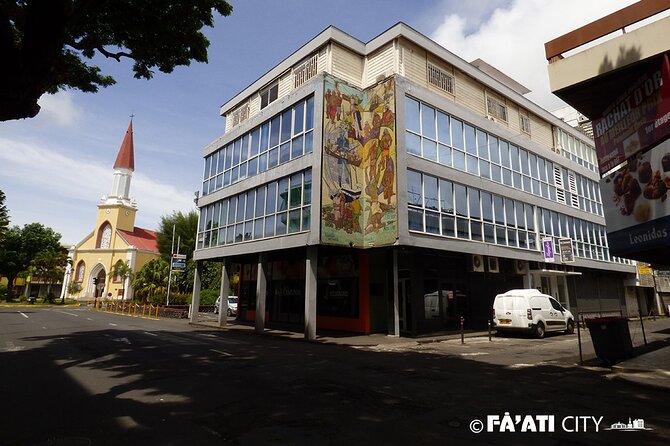
Papeete is often treated as a stopover before the beaches and lagoons take over. That is a mistake. The capital can feel busy and ordinary at first glance, but its streets hold the political, commercial, and cultural story of French Polynesia.
This tour gives you a way into that story without asking you to spend half a day in a museum. You move through central Papeete on foot, stopping often while Christian explains what happened here and how it connects to life today.
I like this format for a first visit. You get enough background to understand the city, but you still have time afterward for the waterfront, shopping, a meal, or a return visit to the market. The advertised duration is about two hours, although the description also calls it a half-day exploration. Plan for a focused two-hour walk, with the exact pace shaped by questions, weather, and the interests of your private group.
Christian is the guide most closely associated with this experience. His approach combines general facts with family memories and stories from growing up in Papeete. That matters because the tour is not only about dates, buildings, and political changes. It also helps you notice how Tahitian identity appears in clothing, food, local customs, art, and everyday relationships.
More walking tours in Tahiti:
- Papeete : walking tour
★ 4.9 · 69 reviews - Shared 2 Hour Papeete Walking Tour
★ 5.0 · 13 reviews - Private 2 Hour Walking Tour in Papeete
★ 5.0 · 8 reviews
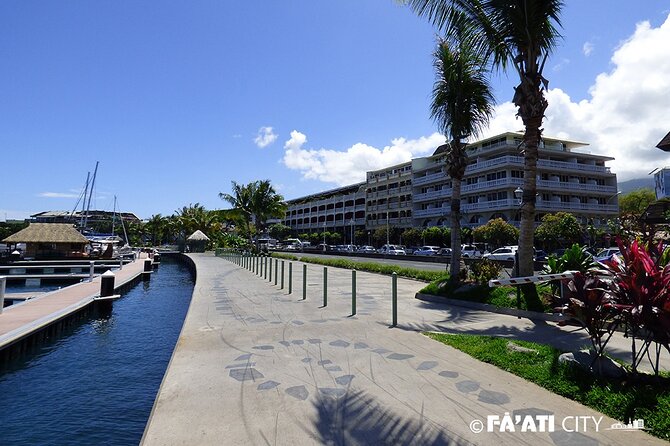
Starting at the Office du Tourisme on the waterfront
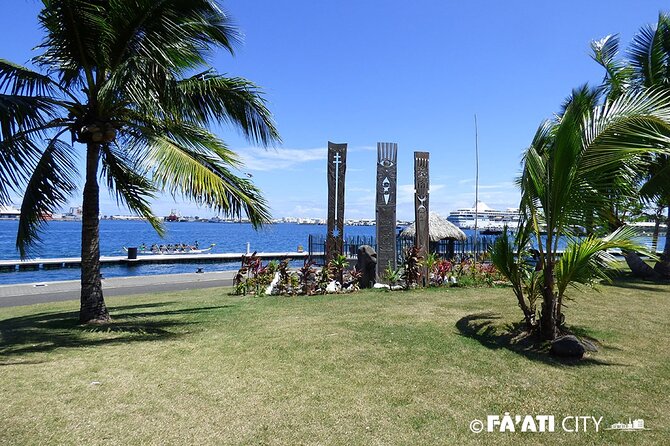
The tour begins at the Office du Tourisme, also called Fare Manihini, on the Front de Mer. This is a sensible meeting point because it places you close to central Papeete and the waterfront, with no hotel pickup or private transport included.
You will need to make your own way there. Public transportation is nearby, but the tour does not include transport to or from the sights. If you are driving, allow extra time. Some streets around the tourist office are pedestrian-only, and parking can be difficult to find.
The meeting point also makes this tour useful for people arriving by cruise or staying in central Papeete. You end back at the same place, so you do not have to work out a second pickup point. From there, you can continue along the waterfront or make your own way to another part of town.
Because the tour is private, the beginning should feel less like joining a large crowd and more like meeting a local contact. That gives you room to ask basic questions, request clarification, or focus on subjects that interest you. If you want food tips, political background, family customs, or help understanding what you see at the market, say so early.
The Municipal Market: the best place to read local life
The first main stop is Papeete’s municipal market, where you spend about 30 minutes. Admission is free, and this is likely the most immediately engaging part of the route for many people.
Markets are useful because they show a place through ordinary life rather than official landmarks. Here, Christian can help you understand what you are looking at, from local products and food to the way the market fits into the city. Several people specifically appreciated receiving advice about where to eat and shop, which makes this stop practical as well as cultural.
Give yourself time to look closely. The value is not simply walking past stalls and taking photographs. It is learning what has meaning locally, what is made or sold in Papeete, and how food and clothing connect to Tahitian culture.
The market can also be a lively place, but do not expect this tour to function as a dedicated food tasting. Drinks are not included, and no tasting program is listed. You are learning and observing, not signing up for a meal.
If you are interested in returning later, use the visit to ask Christian what deserves a second look. A guided first pass is often helpful because the market may seem confusing when you are on your own. You can return afterward with a better idea of what you want to buy or try.
Mairie de Papeete and the story behind the architecture
The next listed stop is Mairie de Papeete, the city hall. The stop lasts about 15 minutes and focuses on the building’s colonial architecture and history.
This is a short visit, but it adds an important layer to the market. After seeing daily commerce, you get a look at the official side of the city. Christian explains how the building fits into Papeete’s past, giving you a clearer sense of how French influence shaped the capital.
Do not expect a long interior tour. The experience is built around seeing the building and hearing its story, not spending an hour inside. That works well for a two-hour walk, but people who want detailed architectural access should keep their expectations modest.
I like this stop because it shows how much information can be packed into a short pause. A building can look attractive without telling you much. With a local guide, its design becomes a prompt for discussing colonial rule, civic life, and the changes Papeete has gone through over time.
The tour also gives you a chance to ask how the city functions now. Christian’s discussions are not limited to the distant past. He connects older buildings and political structures to contemporary Tahitian society, which is one of the strongest reasons to choose this walk over sightseeing alone.
A few more days out around Tahiti
- 5 Hours Tahiti Island Tour – West and East Coast
★ 5.0 · 1,020 reviews - Crossing Island of Tahiti 4×4 Mountain, Waterfall, River, Basins
★ 4.5 · 532 reviews - Découvrez le Mana durant la traversée de Tahiti en 4×4 Safari
★ 5.0 · 456 reviews - Moorea Street Food Tour
★ 5.0 · 410 reviews
The Polynesian Assembly and the former lands of Queen Pomare IV

The third named stop is the Assembly of French Polynesia, the center of local political life. You spend about 15 minutes here, and when the site is open, you may be able to enter its garden.
This stop is especially useful if you want to understand that French Polynesia is not simply a resort destination. The Assembly gives the tour a direct link to current government and local politics. The grounds also sit in the area associated with the former lands of Queen Pomare IV, adding a royal and historical dimension to the visit.
Access is conditional. The garden may not be open, so you should treat entry as a possibility rather than a promise. Even if you cannot enter, Christian can still explain the site and its role in Papeete.
The short time here suits the overall rhythm. You are not attending a political lecture. Instead, you get a clear introduction to the institutions shaping life in French Polynesia, then move on to other parts of the city.
This was one of the parts I would value most on a first visit. It can be easy to look at Tahiti only through scenery and tourism. Seeing the seat of local government, and hearing about the land connected with Queen Pomare IV, reminds you that the islands have their own political story and living culture.
Churches, gardens, and the details between the main stops

The listed stops are not the whole experience. The route also includes churches, gardens, and other central sights. The exact details may change with opening hours, weather, and what your group wants to discuss.
That flexibility is one reason a private walk can work well. If you are curious about architecture, Christian can give more attention to churches and civic buildings. If you want food and shopping advice, the market and commercial streets may receive more focus. If you care about politics and local history, the government buildings offer a natural point for questions.
One useful detail from the tour is the connection to Christian’s family. He has shared stories about his grandmother’s seamstress shop and a dress she designed that became popular in Tahitian culture. That kind of story gives clothing and local style a human face. It also shows why a guide who grew up in Papeete can add context that is hard to find on a self-guided walk.
You should not assume every stop will offer a formal entrance or a long visit. Some places are best understood from the outside, with the guide explaining what you are seeing. The reward is the connection between locations, rather than a checklist of attractions.
The heat, walking pace, and what to bring

Tahiti’s climate makes preparation important. Sun umbrellas and fans are provided, and Christian is attentive to shade and comfort, but those items do not remove the need to plan sensibly.
Wear walking shoes. Bring a hat or cap, sunglasses, and a bottle of water. The tour requires a moderate level of physical fitness, which suggests you should be comfortable walking around central Papeete for roughly two hours, with repeated stops.
Rain is also a possibility. The experience requires good weather, so poor conditions can lead to a different date or a full refund. If the walk goes ahead during light, changing weather, bring protection for yourself and expect the pace to adjust.
I would choose a morning or cooler part of the day if your schedule allows, although the available start time is not specified here. The guide may use shade and pause for water, but you are still walking outdoors. This is not the right pick if you want a fully air-conditioned activity or have trouble walking in heat.
The short stops help. You are not walking continuously for two hours, and the route is designed around pauses at places of interest. Still, good footwear and water will make a real difference.
What the private format means for you
This is a private activity, so only your group participates. That changes the feel of the tour in useful ways. You can ask more questions, stop to clarify a point, and speak openly about subjects that might not fit a large group outing.
It also means the value depends partly on how much you engage. If you prefer a guide to deliver a fixed speech while you listen quietly, this may feel more conversational than expected. If you enjoy asking about family life, politics, food, history, and local customs, the format should suit you well.
Christian is described as patient with questions and flexible in adjusting the walk to personal interests. His local connections also appear to make the streets feel more familiar. He knows people around town and can point out details that would be easy to miss if you were moving quickly from one landmark to another.
The tradeoff is that a private tour at $60.73 per person is not the cheapest way to see central Papeete. The price makes the most sense for people who value direct access to a local guide, a small-group conversation, and an introduction tailored to their interests. If you only want to see the market and take a few photographs, you can do that independently for less.
Is $60.73 a fair price?
At $60.73 per person, the tour offers a reasonable value if you use it as a city orientation rather than a simple walk between landmarks. Taxes, fees, activities, and the guide are included. Drinks, hotel pickup, and transportation are not.
The strongest part of the value is the interpretation. Papeete’s market, city hall, churches, gardens, and government buildings are accessible on their own, but you would need to research the history and local context separately. Christian brings those subjects together in one route and adds personal stories from Papeete.
The tour is also a good way to spend the first few hours of your Tahiti visit. You can learn where to eat and shop, understand the layout of central Papeete, and then return to places that caught your attention. Several people used the walk as an introduction before exploring the city independently.
For a solo visitor, the cost may feel high compared with wandering alone. For a couple or small private group, the chance to ask questions directly can make the price easier to justify. The 95 percent recommendation and 4.8 rating from 78 reviews also point to a consistently strong experience, especially for people who want history and local context rather than a sightseeing checklist.
Who should book this Papeete walk?
I would recommend it most strongly to first-time visitors, cruise passengers with a few hours in port, and people staying in Tahiti before or after a beach holiday. It gives you a practical introduction without taking your entire day.
It also suits anyone curious about the country beyond the resorts. The tour covers government, colonial architecture, local customs, food, shopping, family stories, and Tahitian identity. That range makes it more useful than a walk focused only on pretty buildings.
Families and mixed-interest groups may also find the private format helpful, since the guide can adjust the emphasis. People who dislike heat, have limited walking ability, or want a fully scheduled transport-based tour should think carefully before booking.
Bring questions. Ask about what you see, where to eat, and what deserves more time later. The experience works best when you treat Christian as a local guide to the city, not simply someone leading you from one photo stop to the next.
Should you book the Papeete Walking Tour?
Book it if you want Papeete explained by someone with a personal connection to the city. Christian’s stories, the market visit, the civic buildings, and the discussion of modern Tahitian life give the walk more substance than a quick independent circuit.
Skip it if you are mainly looking for beaches, scenic drives, or a formal attraction with guaranteed indoor access. This is an outdoor walking experience, and the market, Assembly garden, and other stops can be affected by opening hours and weather.
For most first visits, I would schedule it early in your stay. You will leave with a better sense of Papeete, useful ideas for food and shopping, and enough context to notice more when you explore the rest of Tahiti.
FAQ
How long does the Papeete Walking Tour last?
The tour lasts approximately two hours. The experience description also calls it a half-day exploration, but the listed duration is about two hours.
Where does the tour begin?
It begins at the Office du Tourisme, Fare Manihini, on the Front de Mer in Papeete.
Where does the tour end?
The activity ends back at the same meeting point, the Office du Tourisme.
Is this a private tour?
Yes. Only your group participates in the activity, and at least one person is required for a booking.
What places are included on the walk?
The route includes the Municipal Market, Mairie de Papeete, and the Assembly of French Polynesia. It may also include churches, gardens, and other central sights.
Is entry to the attractions included?
All listed activities, taxes, fees, and the tour escort are included. Admission to the Municipal Market, Mairie de Papeete, and the Assembly stop is listed as free. Access to the Assembly garden depends on whether it is open.
What should I bring?
Bring walking shoes, a hat or cap, a bottle of water, and sunglasses. Sun umbrellas and fans are provided for comfort.
Can I cancel the tour?
You can cancel at least 24 hours before the start time for a full refund. Cancellations or changes made less than 24 hours before the start time are not accepted for a refund. If poor weather causes the operator to cancel, you can receive a different date or a full refund.
Just added around Tahiti
- Wholesale Fishing in Poti Marara at Tahiti Teahupoo Peninsula★ 5.0 · 4 reviews
- Small group snorkeling (5 people max): wrecks & tropical fishes at 3:30pm★ 5.0 · 7 reviews
- Small group snorkeling (5 people max): Turtles at 7:30am★ 5.0 · 40 reviews
- Whale watching on the preserved and quiet coast of Paea (Pk26)★ 5.0 · 40 reviews
- Whale Watching Activity★ 5.0 · 8 reviews
- Taxi Boat to Watch the Teahupoo International Surfing Competition★ 4.5 · 13 reviews
- Private Tours of Tahiti by Lydia. Full or Half Day★ 5.0 · 46 reviews
- Tahiti Full Day Private Coastal Tour★ 5.0 · 16 reviews
Tahiti Tours, compared.
5 Hours Tahiti Island Tour – West and East Coast
Read the full review →
Crossing Island of Tahiti 4×4 Mountain, Waterfall, River, Basins
Read the full review →

Unique Tahiti Tour – personalised, small group east coast tour
Read the full review →

Unique Tahiti Tour – personalised, small group west coast tour
Read the full review →
Browse the lists this tour appears in