
Reviewed · TAHITI TOURS
Aquablue Moorea
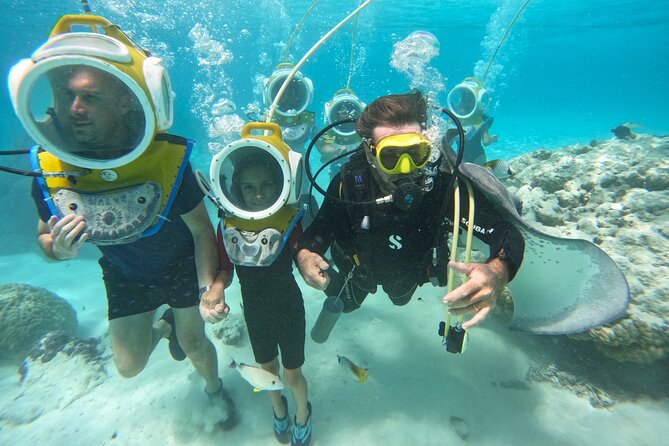
The star of this outing is the yellow sea-walking helmet. You walk along the lagoon floor among colorful fish while breathing normally, with a professional instructor nearby. You do not need to know how to swim, which makes this a useful choice for families and anyone uneasy with a mask.
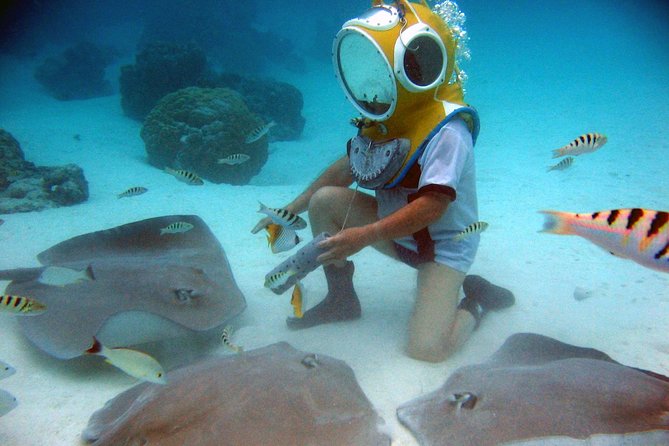
I like the calm, personal feel of a group limited to eight, and I like the care shown by Vincent, Anthony, and Olivier. The team explains each step, checks on you underwater, and often brings you close to friendly stingrays. The main consideration is the current, which can be a little strong, though a rope is available to hold.
Key points
- Friendly stingrays often swim close to the group, with one ray known for returning to the guides.
- No swimming skills are required, and spectacles are accepted according to the operator’s guidance.
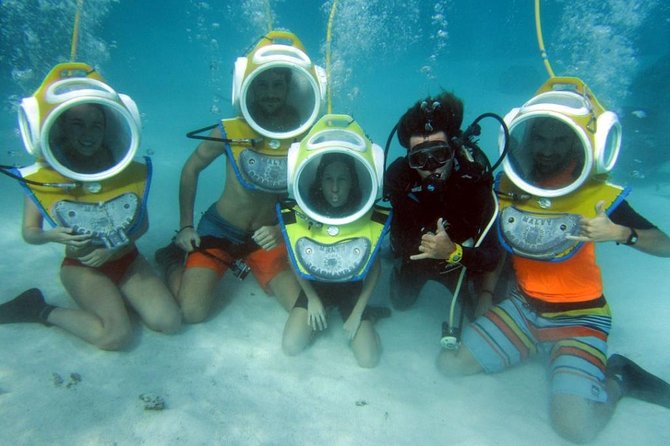
- Small groups of up to eight allow the instructor to give close attention.
- Pickup is offered, including collection near the ferry tender point in Papeete-area cruise arrangements.
- Photos and video are available as an extra, and they can preserve an unusual family memory.
- The activity suits children from age six, provided they have a moderate level of physical fitness.
Walking beneath Moorea’s lagoon
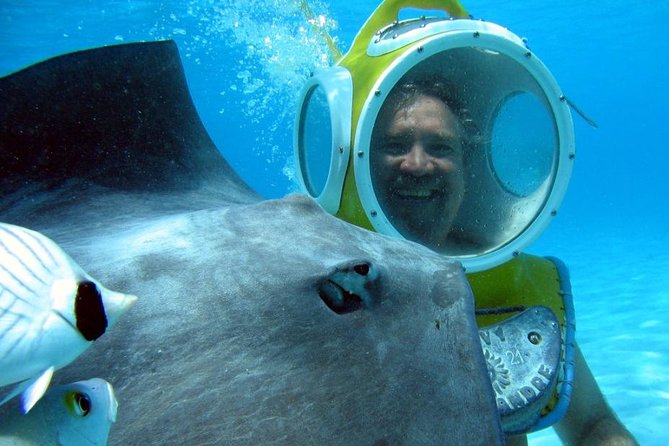
Aquablue Moorea offers something different from ordinary snorkeling. Instead of keeping your face in the water and managing a mask, you wear a clear-air helmet that rests over your head and lets you breathe while standing on the seabed.
That simple change matters. If you are a poor swimmer, nervous in open water, or unable to take part in conventional scuba activities, you can still get close to Moorea’s sea life. The experience is also useful for families who want to share the same activity rather than splitting up according to swimming ability.
The advertised outing lasts about two and a half hours. That includes pickup arrangements, the ride to the water, instructions, time beneath the surface, and the return. The actual time on the seabed is only part of the schedule, but the preparation is important. You need to understand how to use the helmet and how to move comfortably before the group begins.
A few more days out around Papeete
- 5 Hours Tahiti Island Tour – West and East Coast
★ 5.0 · 1,020 reviews - Moorea Street Food Tour
★ 5.0 · 410 reviews - Unique Tahiti Tour – personalised, small group east coast tour
★ 4.5 · 314 reviews
Pickup and the ride to the water
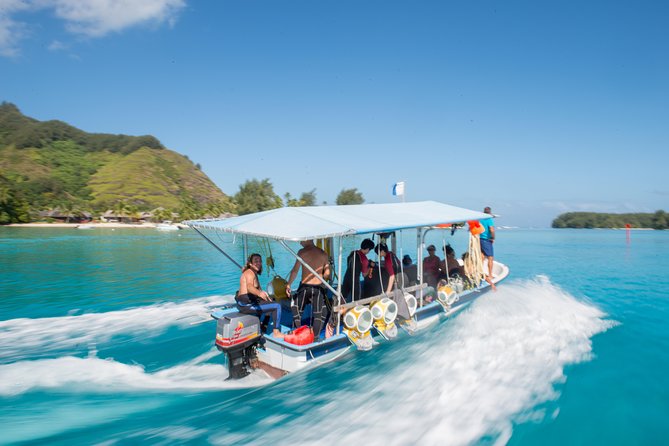
Pickup is offered, and the operator has collected cruise passengers near the ferry tender point. One particularly helpful arrangement is the short transfer described by a cruise passenger, who was picked up near the tender area and driven about five minutes to the starting location.
That detail makes this outing easier to fit into a day on Moorea, especially if you arrive by ferry or cruise tender. Still, confirm your pickup point and timing when you book. The advertised location is Papeete, while the activity itself takes place in Moorea, so your transport plan matters.
The ride can also add a little local color. Vincent has taken people along parts of the island and, on return trips, used a different route to show more of Moorea. This is not a formal sightseeing circuit, and it should not be your reason for booking. But it is a pleasant extra when the schedule allows.
The briefing before you enter the water
The staff begins with a clear explanation of what you will do under the surface. Olivier is specifically praised for giving careful instructions, while Anthony has helped prepare the site and record the activity. Vincent handles communication and has been quick to answer questions before and after booking.
The briefing is especially important if you feel nervous. One participant was worried at first, while another was uncomfortable being underwater and a poor swimmer. Both were reassured by the patient instruction and close support. The team explains how to use the helmet, where to hold on, and what to expect once you reach the seabed.
You should pay attention even if you have worn snorkeling equipment before. A helmet walk feels different from floating on the surface. You are moving along the bottom, and the current may push against you. A rope gives you something steady to hold, but you still need enough physical ability to walk and keep your balance.
The stated requirement is a moderate level of physical fitness. The minimum age is six. The activity is not presented as a difficult athletic challenge, but it is not completely passive either.
The yellow helmet and sea-floor walk
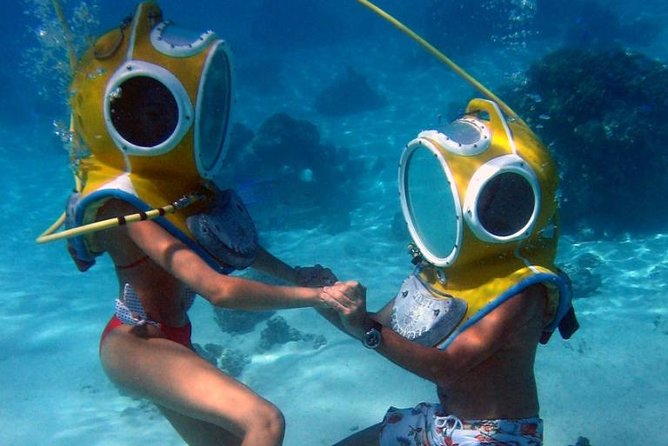
Once the helmet is in place, you can walk beneath the lagoon’s surface without learning complicated swimming technique. The attraction is the close view: fish move around you, and the sandy bottom and nearby reef life become easy to watch at eye level.
You may find the first few minutes unusual. The helmet changes how you hear and move, and the water around you can feel more powerful than it looks from shore. That is why the guide’s presence matters. Olivier and the other staff members stay close, offer help, and check that everyone is comfortable.
The small group limit is a real advantage here. With no more than eight people, the instructor can notice when someone needs help rather than managing a large crowd. It also keeps the experience from feeling like a procession of helmeted people crossing the lagoon floor.
The activity is not a technical underwater qualification, and you are not being taught to operate scuba gear. Think of it as a guided, short walk below the surface, designed to give you access to sea life without the demands of regular snorkeling or scuba.
Same island, a completely different day on the water:
- Unique Tahiti Tour – personalised, small group west coast tour
★ 5.0 · 286 reviews - From Tahiti: Tetiaroa Island Tour by Sailing Catamaran
★ 4.7 · 156 reviews - Unique Tahiti tour to Teahupoo, small group, full day combo tour
★ 5.0 · 155 reviews - private Tahiti island discovery
★ 5.0 · 114 reviews
Stingrays and colorful fish
The stingrays are the memorable part. Friendly rays often circle the guide, sometimes coming close enough for you to see them clearly and, when permitted by the staff, touch them. One ray is described as a regular companion of the team, with participants giving different names for the individual animal in their accounts.
You should keep your hands where the guide directs them and follow the staff’s instructions around the rays. The encounter feels personal because the animals come close, but it remains a guided wildlife experience, not a guarantee that every moment will unfold in exactly the same way.
Along with the rays, you can expect many small, colorful fish. The lagoon is described as calm and clear on good days, which helps you see the animals without needing to swim after them. The contrast with snorkeling is useful: you can stand in place and watch the fish pass instead of constantly adjusting your mask or kicking to stay in position.
The staff’s own relationship with the rays adds to the appeal. Guides know how to keep the group together and where the animals tend to gather. That local familiarity is more valuable here than a long speech about marine life.
Photos and video worth considering
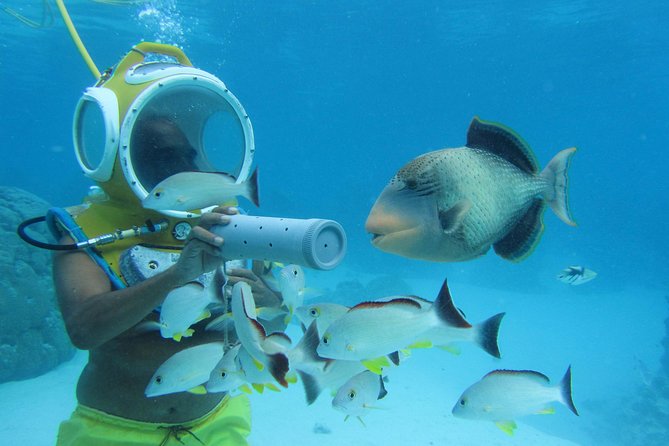
Aquablue offers a photo and video package after or during the activity. Several people considered it worth the cost, especially because it is hard to describe a helmet walk and stingray encounter to friends who were not there.
I would decide before you enter the water whether you want the package. Underwater memories can be difficult to capture with your own phone, and you will be busy staying with the group and watching the animals. The available footage gives you a way to remember the close views of fish, rays, and the seabed.
The package is optional. There is no indication that you must buy it, so include it in your budget only if you value a permanent record. For families, the extra images may be worthwhile because children can revisit the unusual moment long after the trip.
Why the small group changes the experience
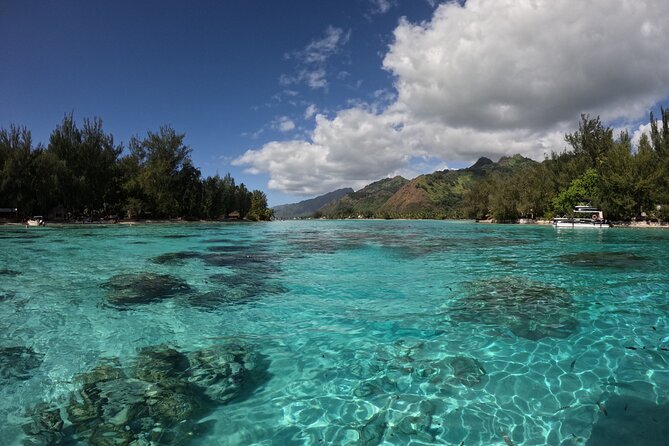
A maximum of eight people is one of the strongest practical features. You are not left to work out the helmet alone, and the guide has room to respond if someone feels anxious or needs another explanation.
The staff also appears to divide responsibilities well. Olivier has guided people underwater, Anthony has helped with setup and photography, and Vincent has handled pickup, communication, and island transport. That attention makes the outing feel organized without making it rigid.
Language should still be part of your planning. One participant appreciated Vincent’s effort to communicate between English and French. If you have detailed medical or mobility concerns, explain them before booking so the team can tell you if the activity is suitable.
The available information says you should have moderate physical fitness. It does not give a full list of medical restrictions, so do not treat the helmet as a solution to every health concern. Ask directly before you commit if you have a condition that affects your ability to walk, tolerate pressure, or remain in the water.
Price and overall value
At $109.55 per person, this is not the cheapest way to see a tropical lagoon. You are paying for more than a short look at fish: the price covers a specialized helmet experience, professional supervision, a small group, and pickup options.
The value is strongest if regular snorkeling is not right for you. A confident swimmer may find snorkeling simpler and less expensive. But if you struggle with a mask, cannot swim well, or want a shared family activity that does not require certification, the extra cost buys access to a part of Moorea you might otherwise miss.
The group size also improves the value. A crowded outing can make an unusual activity feel rushed. Here, close supervision and personal help are central to what you are paying for.
The optional media package is separate, so account for that when comparing prices. You do not need it to enjoy the activity, but it can make sense if this is a major family memory or a rare chance to get clear images of yourself beneath the lagoon.
Who will enjoy this most
I would recommend Aquablue Moorea to:
- Families with children age six and older
- People who are uneasy with snorkeling masks
- Poor swimmers who still want to see sea life up close
- Visitors who cannot take part in regular scuba activities
- Couples looking for an unusual lagoon outing
- Certified divers who want a relaxed, social change of pace
You should think twice if you dislike being in the water, have trouble walking or holding on, or want a long, technical underwater session. This is a guided introduction, not a full scuba excursion.
The activity also depends on weather. If conditions are poor, the outing may be moved to another date or refunded. That is sensible for a lagoon activity, but it means you should avoid placing it at the very end of a tightly scheduled trip if you have another chance to fit it in.
Cancellation is free up to 24 hours before the start time. Cancellations or changes made within 24 hours are not refunded, and the activity may also be canceled if the minimum number of participants is not reached.
Should you book Aquablue Moorea?
Book it if you want close contact with Moorea’s sea life but do not want to swim, snorkel, or manage scuba equipment. The friendly stingrays, patient instruction, small group, and pickup options give the outing a clear advantage over a basic lagoon cruise.
I would especially choose it for a family with mixed swimming abilities. Just allow time for the transfer, expect the current to require some effort, and ask about transport and health concerns before booking. If you are already a strong snorkeler and want the most time in the water for the lowest cost, another activity may suit you better. For everyone else, this is an unusual and practical way to get below Moorea’s surface.
FAQ
How long does the Aquablue Moorea experience last?
The activity lasts approximately 2 hours and 30 minutes, including the pickup and the guided sea-walking experience.
How much does the experience cost?
The listed price is $109.55 per person.
Do I need to know how to swim?
No. The activity is designed so you can walk beneath the sea using a helmet, and swimming knowledge is not required.
What is the minimum age?
The activity is available to people age six and older.
How many people can join the group?
The maximum group size is eight participants.
Is pickup available?
Yes. Pickup is offered, and the operator has collected cruise passengers near the ferry tender point in Moorea arrangements.
What happens if the weather is poor?
If poor weather causes a cancellation, you will be offered another date or a full refund. You can also cancel for a full refund if you do so at least 24 hours before the start time.
Just added around Papeete
- Private transfer Airport, Hotels, Pensions, Ferry, Restaurants★ 4.5 · 16 reviews
- Tahiti: Full Day Tour of the Island★ 4.5 · 15 reviews
- Tahiti: Full Day Tour with Private Flight EN Cessna (Moorea & Tahiti)★ 3.5 · 3 reviews
- Tahiti: Tour of the East or West Coast (Half Day)★ 4.5 · 27 reviews
- Tahiti: Full Day Tour with Taxi Boat (Teahupoo. OJ 2024)★ 5.0 · 14 reviews
- Private Tour of Tahiti’s East Coast 3hours★ 5.0 · 4 reviews
- Private : Tahiti Museum & Circle Island Tour, Afternoon Tour (5h)★ 4.0 · 6 reviews
- Shared Transfer: Hotel or Cruise Port to Tahiti Airport★ 4.5 · 32 reviews
Tahiti Tours, compared.

5 Hours Tahiti Island Tour – West and East Coast
Read the full review →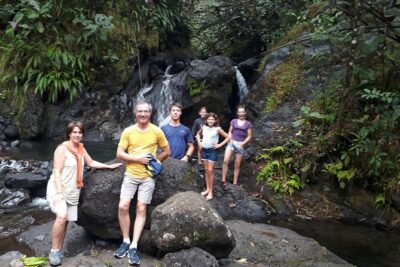
Crossing Island of Tahiti 4×4 Mountain, Waterfall, River, Basins
Read the full review →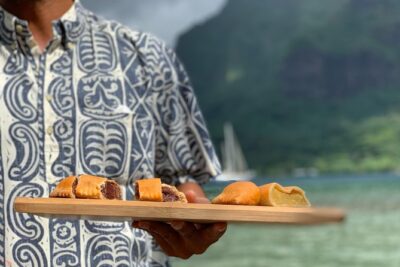

Unique Tahiti Tour – personalised, small group east coast tour
Read the full review →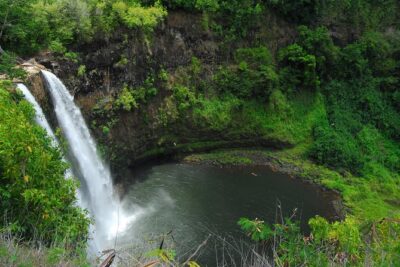

Unique Tahiti Tour – personalised, small group west coast tour
Read the full review →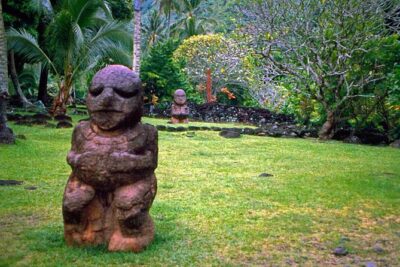
Tetiaroa Island Tour by Sailing Catamaran
Read the full review →Browse the lists this tour appears in